A full 120-lesson year covering matter, motion, energy, geology, weather, cells, ecosystems, astronomy, lab method, and engineering.
About this course
Fifth grade is the year the course starts behaving like real science rather than nature study. Your student measures mass, volume, and density and calculates D = m divided by v; works through balanced and unbalanced forces, all three of Newton's laws, and speed problems; studies heat as conduction, convection, and radiation; goes inside the earth to tectonic plates, seismic waves, mountain formation, and the ocean floor; identifies minerals by the Mohs scale; covers the atmosphere, wind, cloud types, severe weather, weather maps, and world climate zones; learns cell theory and organelles, the five kingdoms, and where fungi, bacteria, protists, and viruses fit; studies biomes, biodiversity, human impact, and conservation; adds the endocrine and lymphatic systems, immunity, and vaccines to the body work; and closes with astronomy including the life cycle of stars, light years, and tides.
Two units set this year apart. A full unit on scientific inquiry teaches the scientific method as a working procedure: forming a hypothesis, separating independent, dependent, and controlled variables, using a control group and repeated trials, recording data, graphing it, drawing conclusions, and writing a lab report, with one lesson on Christian scientists in history. A second unit covers engineering, walking through the nine-step design process from defining a problem to prototyping, testing, and redesigning, then applying it to agriculture, medicine, communication, and space technology.
There are 120 lessons in 12 units of 10, each ending with a unit review lesson, and each planned for about 30 minutes. A lesson opens with a prayer and a wonder question, then gives a labeled key-terms list, a couple of substantial paragraphs of explanation, a worked example, and a King James verse; many carry a photo or diagram inline. Every lesson ends with a ten-question multiple-choice quiz that grades itself, and the assigned homework is a short written paragraph. Listed materials are pencil, paper, and crayons, with suggested experiments that use household items such as a jar of sand and water to settle into layers, or spaghetti and tape for a tower challenge. Your student should be reading and writing independently coming in and comfortable with division and decimals, since density and speed calculations both require it. On the age of the earth, the lesson on geologic time explains relative and radiometric dating, then says plainly that the precise timeline is a matter on which sincere Christians hold a range of views.
What the course covers
Matter, density, physical and chemical change, mixtures and solutions
Forces, Newton's laws, simple machines, energy, and heat transfer
Earth's layers, plate tectonics, volcanoes, minerals, rocks, and soil
The atmosphere, severe weather, weather maps, and climate zones
Cell theory, organelles, the five kingdoms, and microbes
Biomes, biodiversity, human impact, and conservation
The endocrine and lymphatic systems, immunity, and vaccines
The scientific method, variables, data, graphs, and lab reports
Stars, galaxies, light years, moon phases, and tides
The engineering design process and applied technology
What your student will be able to do
Measure mass and volume and calculate density, including by water displacement
Design a fair test with a control group and correctly named variables
Record data, build a graph from it, and write a lab report
Identify a mineral using hardness and other physical properties
Name cell organelles and sort organisms into the five kingdoms
Work through the engineering design process from problem to tested prototype
Scope and sequence
All 12 units of Science for Grade 5, in the order they are taught.
These photographs appear in the lessons themselves, not just on this page. Every one is freely licensed and credited to its photographer at the foot of this page.
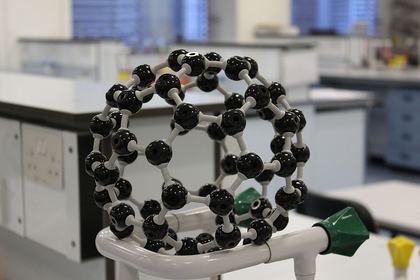
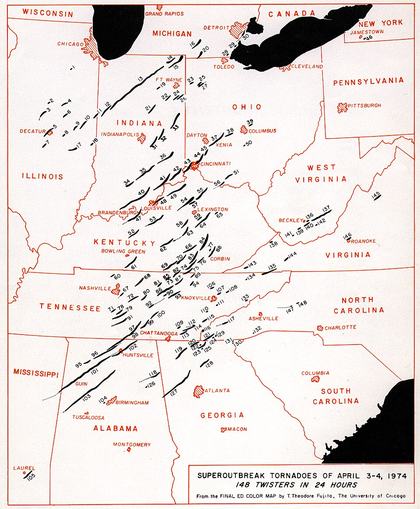
What Is MatterUCL Mathematical and Physical Sciences from London, UK / Wikimedia Commons / CC BY 2.0Earthquakes and Seismic WavesUnknown authorUnknown author / Wikimedia Commons / Public domainReading Weather MapsUnknown / Wikimedia Commons / Public domainVaccines and ImmunityNenad Stojkovic / Wikimedia Commons / CC BY 2.0
Every lesson, by title
All 120 lesson titles are listed here — nothing is withheld until you download. Open a unit to read its contents.
Unit 1: Matter 10 lessons
1What Is Matter10 q
2States of Matter Solid Liquid Gas Plasma10 q
3Physical Properties of Matter10 q
4Measuring Mass Volume and Density10 q
5Physical Changes10 q
6Chemical Changes10 q
7Mixtures and Solutions10 q
8Separating Mixtures10 q
9Pure Substances Elements and Compounds10 q
10Matter Review10 q
Unit 2: Forces and Motion 10 lessons
1What Is a Force10 q
2Balanced and Unbalanced Forces10 q
3Newtons First Law Inertia10 q
4Newtons Second Law Force and Acceleration10 q
5Newtons Third Law Action and Reaction10 q
6Gravity and Weight10 q
7Friction10 q
8Speed Distance and Time10 q
9Simple Machines and Work10 q
10Forces and Motion Review10 q
Unit 3: Energy Transfer 10 lessons
1What Is Energy10 q
2Forms of Energy10 q
3Temperature vs Heat10 q
4Conduction10 q
5Convection10 q
6Radiation10 q
7Insulators and Conductors of Heat10 q
8Heat and Changes of State10 q
9Renewable and Nonrenewable Energy10 q
10Energy Transfer Review10 q
Unit 4: Earth Structure 10 lessons
1Layers of the Earth10 q
2The Crust and Tectonic Plates10 q
3Continental Drift10 q
4Earthquakes and Seismic Waves10 q
5Volcanoes10 q
6Mountain Formation10 q
7The Ocean Floor10 q
8Geologic Time and Rock Layers10 q
9Natural Disasters and Safety10 q
10Earth Structure Review10 q
Unit 5: Rocks and Minerals 10 lessons
1Identifying Minerals10 q
2Mohs Hardness Scale10 q
3Igneous Rocks10 q
4Sedimentary Rocks10 q
5Metamorphic Rocks10 q
6The Rock Cycle10 q
7Soil Formation and Layers10 q
8Soil and Farming10 q
9Using Rocks and Minerals10 q
10Rock Cycle Review10 q
Unit 6: Atmosphere and Weather 10 lessons
1Layers of the Atmosphere10 q
2Air Pressure and Wind10 q
3Water Cycle Review10 q
4Cloud Types and Precipitation10 q
5Severe Weather Thunderstorms10 q
6Tornadoes and Hurricanes10 q
7Reading Weather Maps10 q
8Climate vs Weather10 q
9Climate Zones of the World10 q
10Atmosphere and Weather Review10 q
Unit 7: Living Things: Classification 10 lessons
1Cell Theory10 q
2Parts of a Cell Organelles10 q
3Animal Cells vs Plant Cells10 q
4Unicellular vs Multicellular Organisms10 q
5The Five Kingdoms of Life10 q
6Classifying Animals Vertebrates and Invertebrates10 q
7Classifying Plants10 q
8Fungi Bacteria and Protists10 q
9Viruses and Microbes10 q
10Classification Review10 q
Unit 8: Ecosystems and Biodiversity 10 lessons
1Biodiversity and Why It Matters10 q
2Biomes of the World10 q
3Tropical Rainforests10 q
4Grasslands and Savannas10 q
5Tundra and Polar Regions10 q
6Human Impact on Ecosystems10 q
7Endangered Species and Conservation10 q
8Stewardship of Gods Creation10 q
9Food Web Complexity10 q
10Ecosystems and Biodiversity Review10 q
Unit 9: Human Body Advanced 10 lessons
1Body Systems Overview Review10 q
2The Endocrine System10 q
3The Senses and Nervous System10 q
4Health and Disease10 q
5Vaccines and Immunity10 q
6The Lymphatic System10 q
7Nutrition and Body Systems10 q
8Exercise and Body Health10 q
9Body Systems Working Together10 q
10Human Body Systems Review10 q
Unit 10: Scientific Inquiry 10 lessons
1The Scientific Method10 q
2Forming a Hypothesis10 q
3Designing a Fair Experiment10 q
4Controlled Variables10 q
5Collecting and Recording Data10 q
6Creating and Reading Graphs10 q
7Drawing Conclusions10 q
8Writing a Lab Report10 q
9Famous Christian Scientists10 q
10Scientific Inquiry Review10 q
Unit 11: Astronomy 10 lessons
1Our Solar System Review10 q
2Stars and Their Life Cycle10 q
3Galaxies and the Universe10 q
4Light Years and Distance in Space10 q
5Space Exploration History10 q
6The Moon and Its Phases10 q
7Tides and the Moon10 q
8Seasons and Earths Tilt10 q
9Gods Magnificent Universe10 q
10Astronomy Review10 q
Unit 12: Engineering and Technology 10 lessons
1What Is Engineering10 q
2The Engineering Design Process10 q
3Simple and Compound Machines Review10 q
4Technology in Agriculture10 q
5Medical Technology Advances10 q
6Communication Technology10 q
7Environmental Technology10 q
8Space Technology10 q
9Technology and Christian Stewardship10 q
10Engineering Review10 q
One whole lesson, exactly as it comes
This is a real lesson taken from the middle of the course — the teaching text, the practice, the homework, and the first three quiz questions with their answers. It is not a marketing excerpt.
Unit 7: Living Things: Classification · Lesson 2
Parts of a Cell Organelles
30 minutesPencilPaperCrayons
What this lesson is for
Students will explore and observe Parts of a Cell Organelles
Students will describe what they learned about God's creation
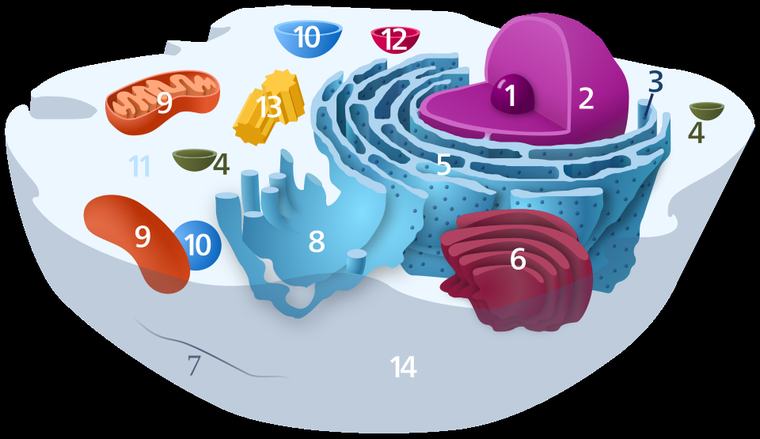
Parts of a Cell OrganellesKelvinsong / Wikimedia Commons / CC0
I will praise thee; for I am fearfully and wonderfully made: marvellous are thy works; and that my soul knoweth right well.
Psalm 139:14
Parts of a Cell: Organelles
Inside every cell is a world of tiny specialized structures called organelles, each with a specific job to do — much like the different workers in a well-run community. God designed each organelle with extraordinary precision, and together they keep the cell alive and functioning. Learning the organelles is like learning the floor plan of the most amazing miniature factory ever built.
Key Terms: organelle — a small structure inside a cell that performs a specific function; nucleus — the control center of the cell, containing DNA; mitochondria — organelles that produce energy (ATP) for the cell; cell membrane — the flexible outer boundary controlling what enters and exits; ribosome — tiny organelle that builds proteins; chloroplast — organelle in plant cells that captures sunlight to make food; vacuole — organelle that stores water, nutrients, or waste
The cell membrane is a flexible outer boundary that controls what enters and leaves the cell — like a gatekeeper. The nucleus is the control center, containing DNA with the complete instructions for the cell. Mitochondria are the "powerhouses," converting glucose and oxygen into usable energy called ATP. Ribosomes are tiny structures that build proteins according to instructions from the nucleus. The endoplasmic reticulum (ER) is a network of folded membranes that processes and transports materials. The Golgi apparatus packages and ships proteins to where they are needed. Vacuoles store water, nutrients, or waste. Lysosomes contain enzymes that break down waste and worn-out parts.
Example: Draw a simple oval to represent a cell. Add a large circle in the center for the nucleus. Draw bean-shaped ovals for mitochondria, small dots for ribosomes, and a large central vacuole. Label each part and write its job next to it. This diagram will help you remember every organelle and its function.
The cell operates like a thriving city: the nucleus is city hall, mitochondria are the power plants, ribosomes are the factories, and the Golgi apparatus is the post office. As Psalm 139:14 says, we are "fearfully and wonderfully made" — and nowhere is that more evident than in the staggering complexity of every cell God designed.
Homework
Write a short paragraph about Parts of a cell organelles.
Note for the parent
Today's lesson covers Parts of a Cell Organelles. Estimated time: 30 minutes. Encourage independent work but be available for questions.
The first three of this lesson's 10 questions
What is the function of the nucleus in a cell?
It produces energy for the cell
It controls what enters and exits the cell
It is the control center, containing DNA with instructions for the cell
It breaks down waste materials
Show the answer
Answer: It is the control center, containing DNA with instructions for the cell
Which organelle is known as the "powerhouse" of the cell?
Ribosome
Golgi apparatus
Vacuole
Mitochondria
Show the answer
Answer: Mitochondria
What do ribosomes do?
Store water and nutrients
Build proteins using instructions from the nucleus
Digest waste and worn-out cell parts
Capture sunlight to make food
Show the answer
Answer: Build proteins using instructions from the nucleus
Another 7 questions follow in the lesson itself, each one graded the moment it is answered.
What comes with the download
120 full lessons
Across 12 units, each with objectives, a teaching passage written to be read aloud, guided practice, and homework.
1,200 quiz questions
Graded the instant they are answered, each with the explanation of why that answer is right.
A gradebook that works
Every score kept, a running average maintained, and a breakdown unit by unit — all in the file itself, nothing sent anywhere.
Progress and attendance
Tick lessons off as they are finished, watch the completion bar fill, and mark days present, absent, or excused.
Report card and certificate
Both printable, with your student's name, the grades, and the dates already filled in.
Backup you control
Export every record to a file you keep, and read it back later. A lost browser cache cannot take the year with it.
An answer key
Hidden from the student by default, there for the parent marking the work.
Nothing that phones home
No ads, no affiliate links, no analytics, no fonts fetched from elsewhere. Unplug the network cable and every one of these files still works.
What you will need
Drawn from the materials named across all 120 lessons of this course. Most families already own most of it.
Download Science — Grade 5
Free, and free of everything else. 19 files, 50.7 MB in total. No account, no email address, no payment. What you download carries no advertising, no affiliate links and no tracking of any kind.
Use it on a screen
Open any of these straight from a folder or a USB stick. They run in the browser with the network cable unplugged, and nothing is ever sent anywhere.
Every photograph on this page is used under a free licence, and is credited here as that licence requires. Photographs are part of the curriculum itself, so they travel with the download as well.
What Is Matter — UCL Mathematical and Physical Sciences from London, UK / Wikimedia Commons / CC BY 2.0
Earthquakes and Seismic Waves — Unknown authorUnknown author / Wikimedia Commons / Public domain