180 lessons rotating through Bible survey, character, study skills, 2,000 years of church history, apologetics, ethics, and worldview.
About this course
Third grade keeps the eight-strand pattern from second grade but raises the level of every strand. The Old Testament survey now runs the full arc from Creation through Abraham, Moses, the Ten Commandments, David, Solomon and the temple, Isaiah and Jeremiah, Daniel, and Esther, and ends by tracing the promise of rescue from Adam to the prophets. The New Testament survey works through the Sermon on the Mount, the parables, the triumphal entry, the Last Supper, the crucifixion, the resurrection, and the Great Commission. Church history stops being a summary of Acts and becomes real history: the Roman persecutions, Constantine, the Nicene Creed, the Middle Ages, Wycliffe and Hus, Luther and the Reformation, the Anabaptists and the Martyrs Mirror, the Great Awakenings, and the modern missionary movement. Apologetics introduces the actual named arguments (cosmological, design, moral), the reliability of the Bible, fulfilled prophecy, the evidence for the resurrection, and the problem of evil. Worldview compares the biblical account of creation, fall, redemption, and restoration with secular humanism and materialism, and ethics reaches into media choices, peer pressure, online kindness, care for the poor, and stewardship of creation.
The year is 180 lessons across 15 units, one per school day, at about 20 minutes each. Each unit is 12 lessons on a single strand, and seven of the eight strands come around a second time in the back half of the year with fresh material rather than repeats. A lesson is a page or two of teaching prose quoting the King James text, a key verse, two or three discussion questions, and a journal or hands-on activity. Every lesson ends with a ten-question multiple-choice quiz that grades itself.
This is the first year the course expects your student to read most of it independently, though the discussion questions are clearly meant to be talked through with you rather than answered alone. A Bible your student can mark, and a notebook to use as a Bible journal, will both get real use. One thing worth knowing before you begin: the ethics and church history strands present the Anabaptist peace position, adult baptism, and separation of church and state warmly and as the house tradition, while questions such as the age of the earth and the details of the end times are generally laid out rather than settled, and left for you and your family to decide.
What the course covers
Old Testament survey: Creation through Daniel and Esther
New Testament survey: the Sermon on the Mount through the Great Commission
Church history: persecution, Nicaea, the Middle Ages, the Reformation, the Anabaptists
Apologetics: cosmological, design, and moral arguments
Evidence for the Bible, fulfilled prophecy, and the resurrection
The problem of evil and suffering
Worldview: creation, fall, redemption, restoration, and rival views
Ethics: honesty, care for the poor, media choices, peer pressure, online conduct
Peacemaking and the Anabaptist tradition
Bible study method: observation, interpretation, application, genres, and tools
What your student will be able to do
Locate and study a passage using observation, interpretation, and application
Identify the genre of a Bible passage and read it accordingly
Explain the cosmological, design, and moral arguments in plain words
Place the major events of church history in order from Pentecost to the present
Compare the biblical worldview with secular humanism and materialism
Work through an everyday ethical decision using Scripture and a written plan
Scope and sequence
All 15 units of Bible for Grade 3, in the order they are taught.
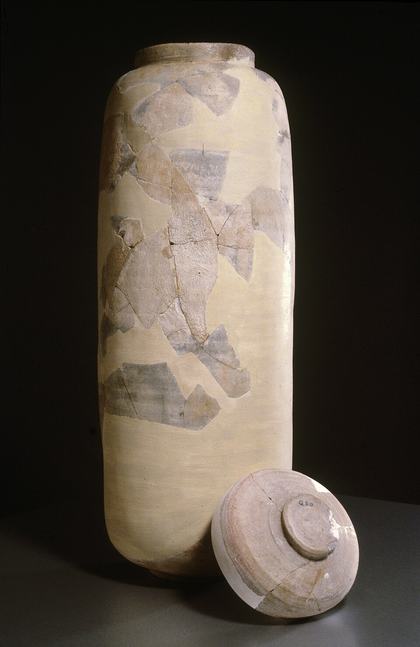
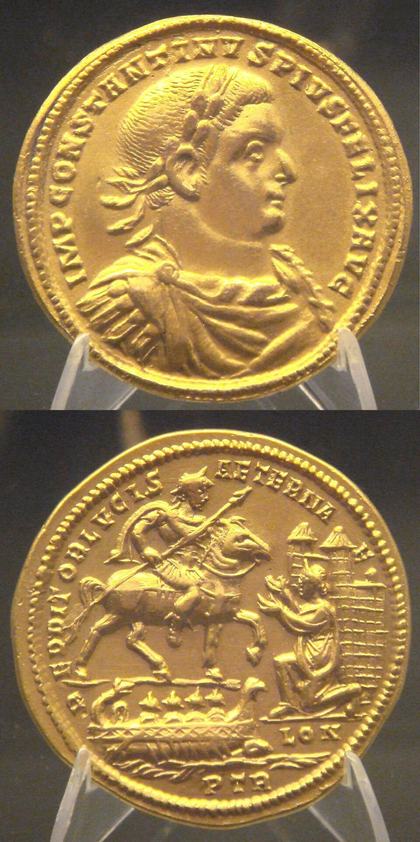
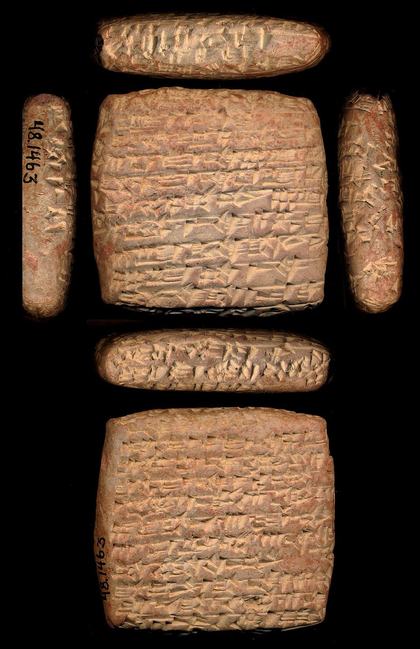
These photographs appear in the lessons themselves, not just on this page. Every one is freely licensed and credited to its photographer at the foot of this page.
Ancient Scroll Storage JarLevantine / Wikimedia Commons / Public domainGold Coin of Constantius IPHGCOM / Wikimedia Commons / Public domainLake Panorama with MountainsDon Graham from Redlands, CA, USA - God bless it! / Wikimedia Commons / CC BY-SA 2.0Cuneiform Clay TabletAnonymous (Turkey)Unknown author / Wikimedia Commons / Public domain
Every lesson, by title
All 180 lesson titles are listed here — nothing is withheld until you download. Open a unit to read its contents.
Unit 1: Old Testament Survey 12 lessons
1What Is the Old Testament?10 q
2Creation and the Fall10 q
3Noah and the Flood10 q
4Abraham: Father of Faith10 q
5Moses and the Exodus10 q
6The Ten Commandments10 q
7David: A Man After God's Heart10 q
8Solomon and the Temple10 q
9The Prophets: Isaiah and Jeremiah10 q
10Daniel in Babylon10 q
11Esther: For Such a Time as This10 q
12Review: The Story of Redemption in the Old Testament10 q
Unit 2: New Testament Survey 12 lessons
1The Birth of Jesus10 q
2Jesus' Baptism and Temptation10 q
3The Sermon on the Mount10 q
4Jesus the Healer and Teacher10 q
5The Parables of Jesus10 q
6The Triumphal Entry10 q
7The Last Supper10 q
8The Crucifixion10 q
9The Resurrection10 q
10The Great Commission10 q
11The Early Church10 q
12Review: The Story of Redemption in the New Testament10 q
Unit 3: Christian Character 12 lessons
1Christian Character - Lesson 110 q
2Christian Character - Lesson 210 q
3Humility10 q
4Christian Character - Lesson 410 q
5Kindness and Compassion10 q
6Patience and Self-Control10 q
7Christian Character - Lesson 710 q
8Thankfulness10 q
9Christian Character - Lesson 910 q
10Generosity10 q
11Christian Character - Lesson 1110 q
12Christian Character - Lesson 1210 q
Unit 4: Bible Study Skills 12 lessons
1Bible Study Skills - Lesson 110 q
2Finding Any Verse10 q
3Using a Table of Contents10 q
4Reading Carefully10 q
5Bible Study Skills - Lesson 510 q
6Interpretation: What Does It Mean?10 q
7Application: How Does It Apply?10 q
8The Bible's Genres10 q
9Using a Bible Dictionary10 q
10Using a Concordance10 q
11Bible Memorization Strategies10 q
12Review: Becoming a Skilled Bible Student10 q
Unit 5: Church History 12 lessons
1The Early Church10 q
2The Apostles and Martyrs10 q
3The Church Spreads10 q
4Persecution Under Rome10 q
5Constantine and the Church10 q
6The Nicene Creed10 q
7The Church in the Middle Ages10 q
8John Wycliffe and John Hus10 q
9The Reformation: Martin Luther10 q
10The Anabaptists10 q
11Missionaries and the Modern Church10 q
12Review: The Church Through the Ages10 q
Unit 6: Apologetics 12 lessons
1What Is Apologetics?10 q
2The Cosmological Argument10 q
3The Design Argument10 q
4The Moral Argument10 q
5The Reliability of the Bible10 q
6Who Is Jesus?10 q
7The Resurrection: Did It Happen?10 q
8Old Testament Prophecy Fulfilled10 q
9The Problem of Evil and Suffering10 q
10Science and the Bible10 q
11Sharing Your Faith with Kindness10 q
12Review: Reasons to Believe10 q
Unit 7: Ethics 12 lessons
1What Is Ethics?10 q
2The Golden Rule10 q
3Honesty in All Things10 q
4Respect for Life10 q
5Caring for the Poor10 q
6Environmental Ethics10 q
7Media and Entertainment Choices10 q
8Peer Pressure and Saying No10 q
9Cyberbullying and Online Kindness10 q
10Money and Generosity10 q
11Anabaptist Ethics: Peace and Nonviolence10 q
12Review: Living an Ethical Life in a Broken World10 q
Unit 8: Worldview 12 lessons
1What is a Worldview?10 q
2The Biblical Worldview: Creation10 q
3The Biblical Worldview: Fall10 q
4The Biblical Worldview: Redemption10 q
5The Biblical Worldview: Restoration10 q
6Secular Humanism: Man Is the Measure10 q
7Materialism: Only Matter Matters10 q
8Science and Faith10 q
9How We Know Truth10 q
10Art, Music, and Culture Through a Biblical Lens10 q
11Choosing Friends and Influences Wisely10 q
12Review: Thinking Christianly in Every Area of Life10 q
Unit 9: Old Testament Survey 12 lessons
1What Is the Old Testament?10 q
2Creation and the Fall10 q
3Old Testament Survey - Lesson 310 q
4Abraham: Father of Faith10 q
5Moses and the Exodus10 q
6The Ten Commandments10 q
7David: A Man After God's Heart10 q
8Old Testament Survey - Lesson 810 q
9The Prophets: Isaiah and Jeremiah10 q
10Daniel in Babylon10 q
11Esther: For Such a Time as This10 q
12Review: The Story of Redemption in the Old Testament10 q
Unit 10: New Testament Survey 12 lessons
1The Birth of Jesus10 q
2Jesus' Baptism and Temptation10 q
3The Sermon on the Mount10 q
4Jesus the Healer and Teacher10 q
5The Parables of Jesus10 q
6New Testament Survey - Lesson 610 q
7The Last Supper10 q
8The Crucifixion10 q
9New Testament Survey - Lesson 910 q
10The Great Commission10 q
11The Early Church10 q
12Review: The Story of Redemption in the New Testament10 q
Unit 11: Christian Character 12 lessons
1Christian Character - Lesson 110 q
2Honesty and Integrity10 q
3Christian Character - Lesson 310 q
4Christian Character - Lesson 410 q
5Kindness and Compassion10 q
6Christian Character - Lesson 610 q
7Forgiveness10 q
8Thankfulness10 q
9Christian Character - Lesson 910 q
10Generosity10 q
11Respect for Authority10 q
12Review: Building a Life of Godly Character10 q
Unit 12: Bible Study Skills 12 lessons
1Bible Study Skills - Lesson 110 q
2Bible Study Skills - Lesson 210 q
3Using a Table of Contents10 q
4Reading Carefully10 q
5Bible Study Skills - Lesson 510 q
6Interpretation: What Does It Mean?10 q
7Bible Study Skills - Lesson 710 q
8The Bible's Genres10 q
9Using a Bible Dictionary10 q
10Using a Concordance10 q
11Bible Study Skills - Lesson 1110 q
12Bible Study Skills - Lesson 1210 q
Unit 13: Church History 12 lessons
1The Early Church10 q
2The Apostles and Martyrs10 q
3The Church Spreads10 q
4Church History - Lesson 410 q
5Church History - Lesson 510 q
6The Nicene Creed10 q
7The Church in the Middle Ages10 q
8John Wycliffe and John Hus10 q
9Church History - Lesson 910 q
10Church History - Lesson 1010 q
11Missionaries and the Modern Church10 q
12Review: The Church Through the Ages10 q
Unit 14: Apologetics 12 lessons
1What Is Apologetics?10 q
2The Cosmological Argument10 q
3Apologetics - Lesson 310 q
4Apologetics - Lesson 410 q
5The Reliability of the Bible10 q
6Who Is Jesus?10 q
7The Resurrection: Did It Happen?10 q
8Old Testament Prophecy Fulfilled10 q
9The Problem of Evil and Suffering10 q
10Science and the Bible10 q
11Sharing Your Faith with Kindness10 q
12Apologetics - Lesson 1210 q
Unit 15: Ethics 12 lessons
1What Is Ethics?10 q
2The Golden Rule10 q
3Honesty in All Things10 q
4Ethics - Lesson 410 q
5Caring for the Poor10 q
6Environmental Ethics10 q
7Media and Entertainment Choices10 q
8Peer Pressure and Saying No10 q
9Cyberbullying and Online Kindness10 q
10Ethics - Lesson 1010 q
11Anabaptist Ethics: Peace and Nonviolence10 q
12Review: Living an Ethical Life in a Broken World10 q
One whole lesson, exactly as it comes
This is a real lesson taken from the middle of the course — the teaching text, the practice, the homework, and the first three quiz questions with their answers. It is not a marketing excerpt.
Unit 8: Worldview · Lesson 9
How We Know Truth
20 minutesBible (KJV or children's Bible)PencilCrayons or colored pencils
All scripture is given by inspiration of God, and is profitable for doctrine, for reproof, for correction, for instruction in righteousness: that the man of God may be perfect, throughly furnished unto all good works.
2 Timothy 3:16-17
How We Know Truth
How do you know something is really true? The world gives many different answers to that question — but only one answer is fully reliable.
Key Verse:"All scripture is given by inspiration of God, and is profitable for doctrine, for reproof, for correction, for instruction in righteousness: that the man of God may be perfect, throughly furnished unto all good works." — 2 Timothy 3:16-17
Teaching:Epistemology (ep-ih-stee-MOL-oh-jee) is the philosophical term for the study of how we know things — how we tell truth from falsehood. Different worldviews use different sources of authority. Feelings: "If it feels true to me, it is true for me." But feelings change constantly, and history is full of people who felt very sure about things that were very wrong. Majority opinion: "If most people believe it, it must be right." But majorities have been catastrophically wrong many times. Science and observation: "If we can measure it and test it, it is real." But science can only address questions about the physical world — it cannot tell us what is morally right or why we exist. Personal experience: "What I have lived through is my truth." But experiences can be misinterpreted, and we all have blind spots. All these sources have some value — but they all have serious limits. The Bible teaches that God's Word is the ultimate standard of all truth (2 Timothy 3:16-17; John 17:17). It is "God-breathed" — every word inspired by the God who made the universe, knows all things, cannot lie, and has revealed Himself to us out of love. This does not mean we dismiss feelings, science, or experience — we value them all. But we run every idea and experience through the lens of Scripture, letting God's Word judge our perceptions rather than our perceptions judging God's Word.
Can you think of an example where feelings led someone to a wrong decision? Why is the Bible a more reliable guide than feelings, opinions, or experiences alone?
Activity: Read John 8:31-32 together: "If ye continue in my word... ye shall know the truth, and the truth shall make you free." Make a list of five truths from the Bible that you are genuinely glad to know.
Homework
Read 2 Timothy 3:16-17 again. Write or tell what today's lesson, How We Know Truth, teaches us.
Note for the parent
Today's lesson covers How We Know Truth. Estimated time: 20 minutes. Encourage independent work but be available for questions.
The first three of this lesson's 10 questions
2 Timothy 3:16-17 says 'All scripture is given by inspiration of God, and is profitable.' What does this establish as a foundation for knowing truth?
Scripture, as God's inspired Word, is our most reliable source of truth for faith and life
We know truth mainly through our feelings and experiences
Truth is found by combining all the world's religious writings together
Truth is discovered mainly through scientific experiments
Show the answer
Answer: Scripture, as God's inspired Word, is our most reliable source of truth for faith and life
The philosophical study of how we know things and tell truth from falsehood is called what?
Ecology
Eschatology
Epistemology
Etymology
Show the answer
Answer: Epistemology
What sources of knowledge does the lesson identify that humans use?
Senses (experience), reason, and revelation (Scripture)
Only Scripture — nothing else is reliable
Feelings and intuition alone
Only logic and reason
Show the answer
Answer: Senses (experience), reason, and revelation (Scripture)
Another 7 questions follow in the lesson itself, each one graded the moment it is answered.
What comes with the download
180 full lessons
Across 15 units, each with objectives, a teaching passage written to be read aloud, guided practice, and homework.
1,800 quiz questions
Graded the instant they are answered, each with the explanation of why that answer is right.
A gradebook that works
Every score kept, a running average maintained, and a breakdown unit by unit — all in the file itself, nothing sent anywhere.
Progress and attendance
Tick lessons off as they are finished, watch the completion bar fill, and mark days present, absent, or excused.
Report card and certificate
Both printable, with your student's name, the grades, and the dates already filled in.
Backup you control
Export every record to a file you keep, and read it back later. A lost browser cache cannot take the year with it.
An answer key
Hidden from the student by default, there for the parent marking the work.
Nothing that phones home
No ads, no affiliate links, no analytics, no fonts fetched from elsewhere. Unplug the network cable and every one of these files still works.
What you will need
Drawn from the materials named across all 180 lessons of this course. Most families already own most of it.
Download Bible — Grade 3
Free, and free of everything else. 19 files, 42.5 MB in total. No account, no email address, no payment. What you download carries no advertising, no affiliate links and no tracking of any kind.
Use it on a screen
Open any of these straight from a folder or a USB stick. They run in the browser with the network cable unplugged, and nothing is ever sent anywhere.
Every photograph on this page is used under a free licence, and is credited here as that licence requires. Photographs are part of the curriculum itself, so they travel with the download as well.
Ancient Scroll Storage Jar — Levantine / Wikimedia Commons / Public domain
Gold Coin of Constantius I — PHGCOM / Wikimedia Commons / Public domain
Lake Panorama with Mountains — Don Graham from Redlands, CA, USA - God bless it! / Wikimedia Commons / CC BY-SA 2.0