A full survey year: America from Native peoples to Reconstruction, world civilizations, geography, civics, and economics.
About this course
Third grade is the first year the survey feels like a real history course. The American history unit runs from Native peoples before European contact through exploration, the early English colonies, colonial life, the road to revolution, the Declaration, the Revolutionary War, the Constitution, westward expansion, the Civil War and slavery, and Reconstruction. World civilizations covers Mesopotamia, Egypt, Israel, Greece, and Rome, then the rise of Christianity within Rome, the Byzantine Empire, medieval Europe, Islam, the Renaissance, and the Reformation. Geography moves from map skills and the continents and oceans into landforms, climate zones, biomes, and a continent-by-continent look at physical features. Civics gives each branch of the federal government its own lesson and adds the Bill of Rights, elections, taxes and public services, and a lesson on the Anabaptist two-kingdoms view, which explains where the Mennonites and Amish came from and what "render unto Caesar" has meant to them. Economics covers producers and consumers, supply and demand, the history of money, tithing, trade, entrepreneurs, taxation, and a comparison of economic systems. The culture unit surveys African, Asian, Latin American, Middle Eastern, and Western cultures, and the current events unit teaches fact against opinion, digital citizenship, the persecuted church, and how to spot bias in a news story.
There are 108 lessons, nine units of twelve, at about 30 minutes each. The writing now speaks directly to the student rather than to you: a page of clear prose with key terms in bold, real dates and figures, two or three questions to think through, a King James verse, and a short activity such as drawing a Civil War timeline, making a two-column chart of the two kingdoms, or comparing two headlines about the same event from different sources. Each lesson closes with a ten-question multiple-choice quiz that grades itself. One thing to know about the layout: the community and citizenship unit appears twice, as unit one and again as unit nine, covering the same twelve topics with freshly written text and a different set of quiz questions, so the year ends where it began.
This level assumes a student who can read a page independently and write a sentence or two in response. Difficult material is handled plainly and without graphic detail. Slavery is named as an evil and measured against Genesis 1:27, the Civil War lesson gives the real casualty figure, and Islam is described accurately in its own terms before being compared with biblical teaching, with an explicit call to treat Muslims with gentleness and respect. Pencil, paper, and crayons cover almost every activity, though a map or atlas and occasional access to a news source are useful.
What the course covers
Native peoples, European exploration, and the English colonies
The Revolution, the Constitution, and westward expansion
The Civil War, slavery, and Reconstruction
Mesopotamia, Egypt, Israel, Greece, and Rome
Early Christianity, Byzantium, medieval Europe, and Islam
The Renaissance and the Reformation
Map skills, continents, oceans, climate zones, and biomes
The three branches, the Bill of Rights, elections, and taxes
Anabaptist two-kingdoms civics
Money, trade, entrepreneurs, economic systems, and media literacy
What your student will be able to do
Place the major events of American history in order with their dates
Compare ancient civilizations by geography, government, and beliefs
Describe the job of each branch of the federal government
Locate continents, oceans, climate zones, and major landforms on a map
Explain supply and demand, taxation, and the basics of stewardship
Question a news story for missing facts, loaded language, and bias
Scope and sequence
All 9 units of History & Geography for Grade 3, in the order they are taught.
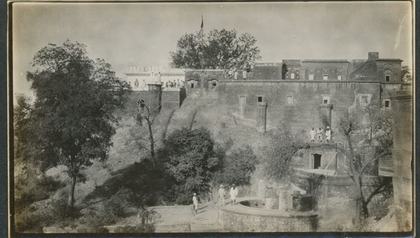
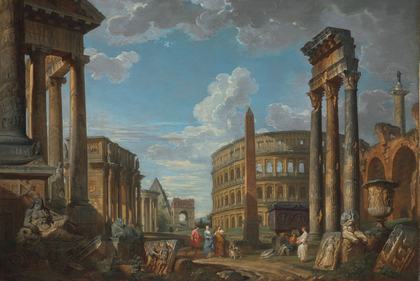
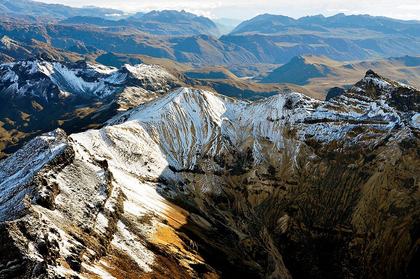
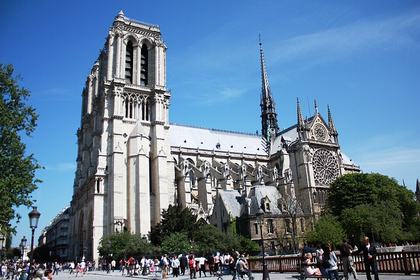
These photographs appear in the lessons themselves, not just on this page. Every one is freely licensed and credited to its photographer at the foot of this page.
Community Leader SpeakingUSDAgov / Wikimedia Commons / Public domainA Capriccio of Roman Ruins with the ColosseumGiovanni Paolo Panini / Wikimedia Commons / Public domainAndes Mountains, South AmericaServicio Geológico Colombiano / Wikimedia Commons / CC0Art and Architecture — Notre Dame CathedralDANIEL JULIE from Paris, France / Wikimedia Commons / CC BY 2.0
Every lesson, by title
All 108 lesson titles are listed here — nothing is withheld until you download. Open a unit to read its contents.
Unit 1: Community and Citizenship 12 lessons
1Community and Citizenship — What Is a Community?10 q
2Community and Citizenship — Roles in a Community10 q
3Community and Citizenship — Rights and Responsibilities10 q
4Community and Citizenship — Rules and Laws10 q
5Community and Citizenship — Local Government10 q
6Community and Citizenship — State Government10 q
7Community and Citizenship — National Government10 q
8Community and Citizenship — Patriotism and Service10 q
9Community and Citizenship — Helping Others: Service Projects10 q
10Community and Citizenship — Diversity in Community10 q
11Community and Citizenship — Church as Community10 q
12Community and Citizenship — Review: Being a Good Citizen and Neighbor10 q
Unit 2: American History 12 lessons
1American History — Native Americans Before European Contact10 q
2American History — European Exploration10 q
3American History — Early English Colonies10 q
4American History — Colonial Life10 q
5American History — The Road to Revolution10 q
6American History — The Declaration of Independence10 q
7American History — The Revolutionary War10 q
8American History — The U.S. Constitution10 q
9American History — Westward Expansion10 q
10American History — The Civil War and Slavery10 q
11American History — Reconstruction and Healing10 q
12American History — Review: America's Story Through a Christian Lens10 q
Unit 3: World Civilizations 12 lessons
1World Civilizations — Ancient Mesopotamia10 q
2World Civilizations — Ancient Egypt10 q
3World Civilizations — Ancient Israel10 q
4World Civilizations — Ancient Greece10 q
5World Civilizations — Ancient Rome10 q
6World Civilizations — Rise of Christianity in Rome10 q
7World Civilizations — The Byzantine Empire10 q
8World Civilizations — Medieval Europe10 q
9World Civilizations — Islam10 q
10World Civilizations — The Renaissance10 q
11World Civilizations — The Reformation10 q
12World Civilizations — Review: World Civilizations and God's Overarching Story10 q
Unit 4: Geography 12 lessons
1Geography - Lesson 110 q
2Geography - Lesson 210 q
3Geography - Lesson 310 q
4Geography - Lesson 410 q
5Geography - Lesson 510 q
6Geography - Lesson 610 q
7Geography - Lesson 710 q
8Geography - Lesson 810 q
9Geography - Lesson 910 q
10Geography - Lesson 1010 q
11Geography - Lesson 1110 q
12Geography - Lesson 1210 q
Unit 5: Government and Civics 12 lessons
1Government and Civics - Lesson 110 q
2Government and Civics - Lesson 210 q
3Government and Civics - Lesson 310 q
4Government and Civics - Lesson 410 q
5Government and Civics - Lesson 510 q
6Government and Civics - Lesson 610 q
7Government and Civics - Lesson 710 q
8Government and Civics - Lesson 810 q
9Government and Civics - Lesson 910 q
10Government and Civics - Lesson 1010 q
11Government and Civics - Lesson 1110 q
12Government and Civics - Lesson 1210 q
Unit 6: Economics 12 lessons
1Economics - Lesson 110 q
2Economics - Lesson 210 q
3Economics - Lesson 310 q
4Economics - Lesson 410 q
5Economics - Lesson 510 q
6Economics - Lesson 610 q
7Economics - Lesson 710 q
8Economics - Lesson 810 q
9Economics - Lesson 910 q
10Economics - Lesson 1010 q
11Economics - Lesson 1110 q
12Economics - Lesson 1210 q
Unit 7: Cultural Studies 12 lessons
1Cultural Studies - Lesson 110 q
2Cultural Studies - Lesson 210 q
3Cultural Studies - Lesson 310 q
4Cultural Studies - Lesson 410 q
5Cultural Studies - Lesson 510 q
6Cultural Studies - Lesson 610 q
7Cultural Studies - Lesson 710 q
8Cultural Studies - Lesson 810 q
9Cultural Studies - Lesson 910 q
10Cultural Studies - Lesson 1010 q
11Cultural Studies - Lesson 1110 q
12Cultural Studies - Lesson 1210 q
Unit 8: Current Events 12 lessons
1Current Events - Lesson 110 q
2Current Events - Lesson 210 q
3Current Events - Lesson 310 q
4Current Events - Lesson 410 q
5Current Events - Lesson 510 q
6Current Events - Lesson 610 q
7Current Events - Lesson 710 q
8Current Events - Lesson 810 q
9Current Events - Lesson 910 q
10Current Events - Lesson 1010 q
11Current Events - Lesson 1110 q
12Current Events - Lesson 1210 q
Unit 9: Community and Citizenship 12 lessons
1Community and Citizenship — What Is a Community?10 q
2Community and Citizenship — Roles in a Community10 q
3Community and Citizenship — Rights and Responsibilities10 q
4Community and Citizenship — Rules and Laws10 q
5Community and Citizenship — Local Government10 q
6Community and Citizenship — State Government10 q
7Community and Citizenship — National Government10 q
8Community and Citizenship — Patriotism and Service10 q
9Community and Citizenship — Helping Others: Service Projects10 q
10Community and Citizenship — Diversity in Community10 q
11Community and Citizenship — Church as Community10 q
12Community and Citizenship — Review: Being a Good Citizen and Neighbor10 q
One whole lesson, exactly as it comes
This is a real lesson taken from the middle of the course — the teaching text, the practice, the homework, and the first three quiz questions with their answers. It is not a marketing excerpt.
Unit 5: Government and Civics · Lesson 6
Government and Civics - Lesson 6
30 minutesPencilPaperCrayons or colored pencils
What this lesson is for
Students will learn about Government and civics - lesson 6
Students will understand how people live together in communities
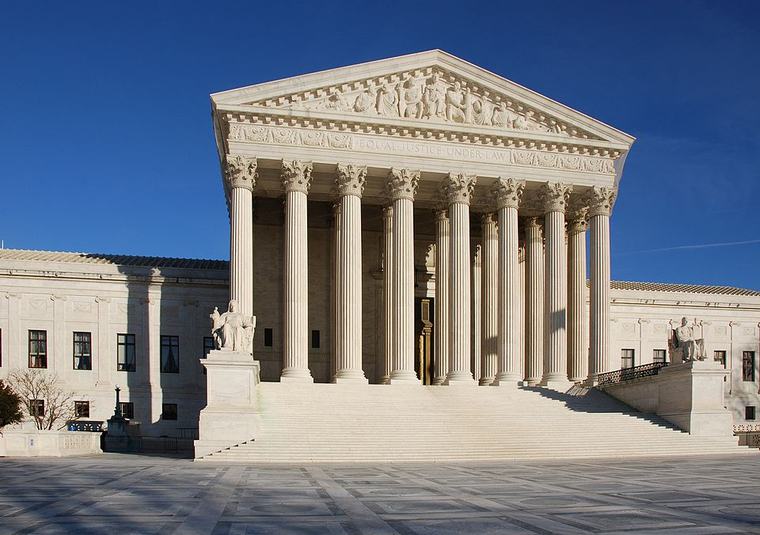
The Judicial Branch — Supreme CourtJarek Tuszyński / Wikimedia Commons / CC BY-SA 3.0
If it be possible, as much as lieth in you, live peaceably with all men.
Romans 12:18
The Judicial Branch
We have learned about making laws (legislative) and enforcing laws (executive). Today we learn about the third branch — the judicial branch, which interprets what the laws MEAN.
The Judicial Branch is the court system that interprets laws — deciding what laws mean and whether they follow the Constitution. The highest court in the United States is the Supreme Court.
The Supreme Court:
Has 9 justices (judges), including one Chief Justice
The President appoints justices; the Senate must approve them
Justices serve for LIFE — this protects them from political pressure
The Supreme Court's decisions are final — no higher court can overrule them in the U.S.
The Court meets in the Supreme Court Building in Washington, D.C.
What the Supreme Court Does:
Reviews laws passed by Congress to make sure they follow the Constitution
If a law violates the Constitution, the Court can strike it down — this is called judicial review
Settles disagreements about what laws mean
Hears cases involving rights protected by the Constitution
Lower Courts: Below the Supreme Court are many lower federal courts — Circuit Courts of Appeals and District Courts — that handle most federal cases before they ever reach the Supreme Court.
The judicial branch is a vital check on the other branches — it can declare a law unconstitutional even if Congress and the President agreed on it. This prevents unjust laws from standing.
How many justices are on the Supreme Court? Why do they serve for life? What is judicial review?
Activity: Draw a diagram of the three branches of government. Show how each one checks the others with arrows and labels.
Close in prayer: "Lord, give our judges wisdom to uphold justice and protect the innocent. Help all our courts to be fair and honest. Amen."
Homework
Answer the review questions about Government and civics - lesson 6.
Note for the parent
Today's lesson covers Government and Civics - Lesson 6. Estimated time: 30 minutes. Encourage independent work but be available for questions.
The first three of this lesson's 10 questions
What is the judicial branch's job?
To write laws
To carry out and enforce laws
To interpret laws and decide if they follow the Constitution
To collect taxes
Show the answer
Answer: To interpret laws and decide if they follow the Constitution
What is the highest court in the United States?
The Court of Appeals
The District Court
The Federal Circuit Court
The Supreme Court of the United States
Show the answer
Answer: The Supreme Court of the United States
How many justices serve on the Supreme Court?
5
7
9
12
Show the answer
Answer: 9
Another 7 questions follow in the lesson itself, each one graded the moment it is answered.
What comes with the download
108 full lessons
Across 9 units, each with objectives, a teaching passage written to be read aloud, guided practice, and homework.
1,080 quiz questions
Graded the instant they are answered, each with the explanation of why that answer is right.
A gradebook that works
Every score kept, a running average maintained, and a breakdown unit by unit — all in the file itself, nothing sent anywhere.
Progress and attendance
Tick lessons off as they are finished, watch the completion bar fill, and mark days present, absent, or excused.
Report card and certificate
Both printable, with your student's name, the grades, and the dates already filled in.
Backup you control
Export every record to a file you keep, and read it back later. A lost browser cache cannot take the year with it.
An answer key
Hidden from the student by default, there for the parent marking the work.
Nothing that phones home
No ads, no affiliate links, no analytics, no fonts fetched from elsewhere. Unplug the network cable and every one of these files still works.
What you will need
Drawn from the materials named across all 108 lessons of this course. Most families already own most of it.
Download History & Geography — Grade 3
Free, and free of everything else. 19 files, 55.6 MB in total. No account, no email address, no payment. What you download carries no advertising, no affiliate links and no tracking of any kind.
Use it on a screen
Open any of these straight from a folder or a USB stick. They run in the browser with the network cable unplugged, and nothing is ever sent anywhere.
Every photograph on this page is used under a free licence, and is credited here as that licence requires. Photographs are part of the curriculum itself, so they travel with the download as well.
Community Leader Speaking — USDAgov / Wikimedia Commons / Public domain
A Capriccio of Roman Ruins with the Colosseum — Giovanni Paolo Panini / Wikimedia Commons / Public domain
Andes Mountains, South America — Servicio Geológico Colombiano / Wikimedia Commons / CC0
Art and Architecture — Notre Dame Cathedral — DANIEL JULIE from Paris, France / Wikimedia Commons / CC BY 2.0
The Judicial Branch — Supreme Court — Jarek Tuszyński / Wikimedia Commons / CC BY-SA 3.0