A self-paced study of American government and the Christian's place in it, from the Constitution to the local ballot.
Elective Self-paced. It is not part of the daily schedule, so it can be taken over a summer, spread across a year, or left out entirely.
One course, offered four ways. Civics & Government is self-paced, and the same course is listed under Grade 9, Grade 10, Grade 11 and Grade 12 so it can be counted as a credit in whichever year a family takes it. The lessons are identical; take it whenever it suits.
This elective is a full high school course in American government, taught from a Christian understanding of authority. It opens with the question of why government exists at all, working through Romans 13, the purpose and the limits of civil power, the rule of law, and where rights come from. From there it moves through the Declaration of Independence and the Revolution, the Constitutional Convention and the design of the Constitution, Congress and the lawmaking process, the presidency and its limits, the federal courts and judicial review, federalism and the state, county, and city governments closest to home, the Bill of Rights and the duties of citizenship, elections and voting, and finally the Christian's own calling in civic life. Each lesson opens with a verse from the King James Bible.
The course is 10 units of 10 lessons each, 100 lessons in all, self-paced rather than tied to a daily schedule. A lesson is a short reading, most of them 300 to 900 words, followed by a ten-question multiple-choice quiz that grades itself. There is nothing to buy and no hands-on work required. The prose is plain and defines its terms as it goes, so a student who has not yet studied American history can follow it, though it will mean more to one who has.
A word about perspective, since this is a subject where that matters. The course teaches that civil government is ordained by God for order and justice, and just as plainly that its authority is limited and that conscience before God comes first. Where faithful Christians have long disagreed, it sets the views side by side and leaves the conclusion to you and your family. Unit 1 and Unit 10 both walk through the range of Christian positions on voting, office-holding, oaths, and military service, and Unit 10 gives an honest hearing to the historic Anabaptist two kingdoms understanding of church and state, including nonresistance. Unit 9 covers elections in the ordinary way: how they work, the Electoral College, the parties, registering to vote, and how to read a campaign advertisement critically, without arguing for any party or candidate. Present-day partisan controversies are left alone, and one lesson is given to civility in political disagreement. The content is entirely American, so a family outside the United States would be reading it as a study of another nation's system.
What the course covers
The biblical basis and the limits of civil authority
The Declaration of Independence and the American Revolution
The Constitution, separation of powers, and checks and balances
Congress, committees, and how a bill becomes a law
The presidency, the cabinet, and executive power
The federal courts, judicial review, and landmark cases
Federalism and state, county, and city government
The Bill of Rights and the responsibilities of citizenship
Elections, the Electoral College, and political parties
Two kingdoms theology and historic Anabaptist views of government
What your student will be able to do
Trace a bill from introduction through committee, floor votes, and presidential action
Explain how separation of powers and checks and balances hold each branch in bounds
Identify which level of government, federal or state or local, handles a given matter
Recognize your rights in a courtroom and your everyday civic responsibilities
Weigh a campaign message for evidence, funding source, and missing context
Compare differing Christian views on civic engagement and talk them over with your family
Scope and sequence
All 10 units of Civics & Government for Grade 9, in the order they are taught.
Units in this course, in teaching order
Unit
Covers
Lessons
Questions
Jump to lessons
Unit 1
God, Government & Authority: A Biblical Foundation
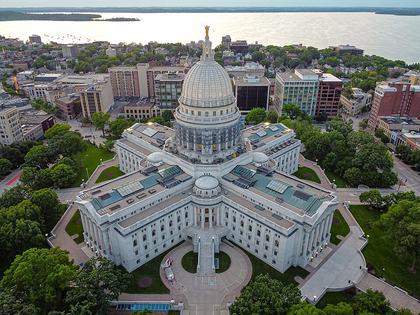
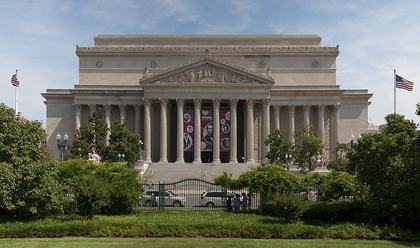
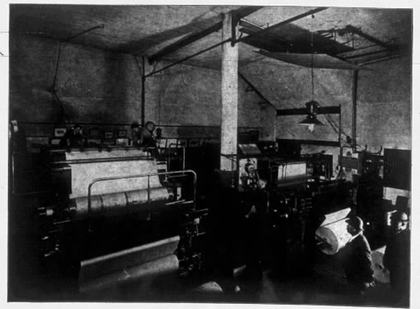
These photographs appear in the lessons themselves, not just on this page. Every one is freely licensed and credited to its photographer at the foot of this page.
Why Government Exists: A Biblical PerspectiveChrismiceli / Wikimedia Commons / CC0Federalism: Dividing Power Between Levels of GovernmentWikideas1 / Wikimedia Commons / CC0The Federal BureaucracyDavid Samuel / Wikimedia Commons / CC BY-SA 3.0Freedom of Speech and the PressUnknown / Wikimedia Commons / Public domain
Every lesson, by title
All 100 lesson titles are listed here — nothing is withheld until you download. Open a unit to read its contents.
Unit 1: God, Government & Authority: A Biblical Foundation 10 lessons
1Why Government Exists: A Biblical Perspective10 q
2Romans 13 and Submission to Authority10 q
3The Purpose and Limits of Government10 q
4Different Forms of Government Throughout History10 q
5Consent of the Governed10 q
6The Rule of Law10 q
7Rights: Where Do They Come From?10 q
8Balancing Liberty and Order10 q
9When Christians Have Disagreed About Civic Engagement10 q
10A Christian Framework for Thinking About Government10 q
Unit 2: Independence & Ideals: The Declaration & Revolution 10 lessons
1Why the Colonies Sought Independence10 q
2Key Ideas in the Declaration of Independence10 q
3"Unalienable Rights" and Their Meaning10 q
4The Influence of Enlightenment and Christian Thought on the Founders10 q
5Grievances Against the Crown10 q
6The Signers and Their Sacrifice10 q
7From Declaration to Revolution10 q
8The Articles of Confederation: A First Attempt10 q
9Why a Stronger Union Was Needed10 q
10The Legacy of 177610 q
Unit 3: The Constitution: Design, Powers & Endurance 10 lessons
1The Constitutional Convention of 178710 q
2The Preamble: "We the People"10 q
3Separation of Powers10 q
4Checks and Balances10 q
5Federalism: Dividing Power Between Levels of Government10 q
6The Bill of Rights10 q
7The Amendment Process10 q
8The Federalist Papers and the Ratification Debate10 q
9Judicial Review and Marbury v. Madison10 q
10Why the Constitution Has Endured10 q
Unit 4: Congress & Lawmaking: How Legislation Works 10 lessons
1Why the Founders Created a Legislature10 q
2The House of Representatives10 q
3The Senate10 q
4How a Bill Becomes a Law10 q
5Congressional Committees10 q
6Representing Constituents10 q
7The Power of the Purse10 q
8Congressional Oversight of Other Branches10 q
9Debate, Compromise, and Deliberation10 q
10Being an Informed Citizen About Congress10 q
Unit 5: The Presidency: Executive Power & Limits 10 lessons
1The Role of the President10 q
2Qualifications and Election of the President10 q
3Presidential Powers and Their Limits10 q
4The Cabinet and Executive Departments10 q
5The Vice President and Presidential Succession10 q
6Executive Orders10 q
7The President as Commander in Chief10 q
8Foreign Policy and Diplomacy10 q
9The Federal Bureaucracy10 q
10Praying for Those in Authority10 q
Unit 6: The Courts & Justice: From Trial to Supreme Bench 10 lessons
1Why an Independent Judiciary Matters10 q
2The Supreme Court10 q
3Federal Courts Below the Supreme Court10 q
4How Justices Are Appointed10 q
5How the Supreme Court Decides Cases10 q
6Landmark Supreme Court Cases10 q
7Constitutional Interpretation: Different Approaches10 q
8Civil Law vs. Criminal Law10 q
9Your Rights If You Ever Go to Court10 q
10Justice, Mercy, and the Christian's View of Law10 q
Unit 7: Federalism: Sharing Power Across Levels 10 lessons
1What Is Federalism?10 q
2Powers Reserved to the States10 q
3State Constitutions and Governments10 q
4Governors and State Executives10 q
5State Legislatures10 q
6State and Local Courts10 q
7Counties, Cities, and Local Government10 q
8Where Federal and State Power Overlap10 q
9Why Local Government Matters to You10 q
10Civic Involvement Close to Home10 q
Unit 8: Rights & Responsibilities: Citizenship in Action 10 lessons
1Becoming a U.S. Citizen10 q
2The Bill of Rights in Everyday Life10 q
3Freedom of Religion and Conscience10 q
4Freedom of Speech and the Press10 q
5The Right to Due Process10 q
6Civic Responsibilities: Jury Duty, Taxes, and Obedience to Law10 q
7Balancing Individual Rights and Community Good10 q
8Civil Disobedience: A Christian Perspective10 q
9Protecting the Vulnerable Through Just Laws10 q
10What Good Citizenship Looks Like for a Christian10 q
Unit 9: Elections & Voices: Democratic Participation 10 lessons
1How Elections Work in America10 q
2The Electoral College10 q
3Political Parties: A Brief History10 q
4Primaries, Caucuses, and General Elections10 q
5Campaigns and Political Advertising: Thinking Critically10 q
6Registering to Vote and Voting Responsibly10 q
7Being an Informed Voter10 q
8Civility in Political Disagreement10 q
9Ways to Serve Your Community Beyond Voting10 q
10Praying and Working for the Common Good10 q
Unit 10: Faith & Civic Engagement: A Christian Calling 10 lessons
1Salt and Light: The Christian's Call in Society10 q
2Two Kingdoms: Citizens of Earth and Heaven10 q
3Historic Anabaptist Perspectives on Government10 q
4Different Christian Traditions on Political Engagement10 q
5Praying for Leaders of Every Kind10 q
6Serving Your Neighbor Through Civic Life10 q
7When Conscience and Law Conflict10 q
8Raising the Next Generation of Faithful Citizens10 q
9Humility and Grace in Political Conversations10 q
10Hope Beyond Any Government10 q
One whole lesson, exactly as it comes
This is a real lesson taken from the middle of the course — the teaching text, the practice, the homework, and the first three quiz questions with their answers. It is not a marketing excerpt.
Unit 6: The Courts & Justice: From Trial to Supreme Bench · Lesson 1
Why an Independent Judiciary Matters
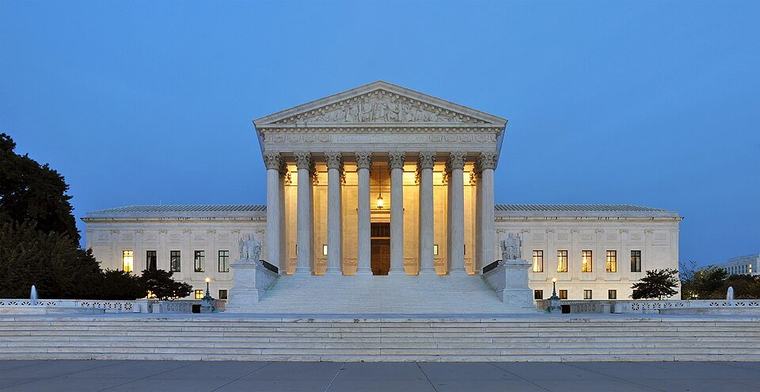
Why an Independent Judiciary MattersJoe Ravi / Wikimedia Commons / CC BY-SA 3.0
An independent judiciary is one of the most important protections any free society can have. When we talk about judicial independence, we mean that judges make decisions based on the law and the facts of a case, not on pressure from politicians, wealthy people, or anyone else seeking to abuse power. But why does this matter so much? What does an independent court system actually do for ordinary citizens like you?
The Problem Without Independence
Throughout history, many nations have suffered under judges who could not act independently. In such places, if a ruler disliked someone, he could simply order a judge to punish that person—not because they broke any law, but because the ruler wanted revenge or wanted to eliminate an enemy. Without independent judges, there is no real justice. There is only the will of those in power.
Proverbs 29:4 tells us exactly this truth: "The king by judgment establisheth the land: but he that receiveth gifts overthroweth it." A nation becomes strong through fair judgment. But it falls into ruin when leaders make decisions based on bribes or personal interest rather than justice.
Why Separation of Powers Protects Freedom
America's founders understood history's hard lessons about power and corruption. They deliberately designed our government with three separate branches: legislative (Congress), executive (President), and judicial (courts). Each branch checks the others. The President cannot simply declare someone guilty. Congress cannot force judges to rule a certain way. And judges cannot create laws by themselves. This separation of power means that no single person or small group can gather all authority into their hands.
The judicial branch's primary job is to interpret the law fairly and protect people's rights under the Constitution. This mission requires independence. Judges must be free from political pressure so they can focus on what the law actually says and whether government officials are following constitutional limits.
How America Protects Judicial Independence
Federal judges in America receive lifetime appointments. Once a president nominates a judge and the Senate confirms them, that judge cannot be fired simply because a president disagrees with their decisions. This arrangement protects judges from political retaliation. A judge is free to rule fairly without fear of losing their job.
State judges have different systems—some are elected by voters, others are appointed—but the principle remains: we want judges thinking about the law and justice, not about pleasing powerful people who might punish them.
How Independence Affects Your Daily Life
You may never argue a case in court, but judicial independence shapes your everyday freedoms. If police search your home, is it legal? An independent judge decides. If the government wants to punish you, can it do so without a fair trial? An independent court system ensures fair process. If someone breaks a contract with you, can you get justice? Courts decide such disputes fairly.
Without judicial independence, these protections vanish. The powerful could crush the weak without consequence. The government could act without restraint. Our founders understood that freedom requires more than inspiring words in law books—it requires judges willing to uphold those laws, even when someone powerful wants them ignored.
The first three of this lesson's 10 questions
What does judicial independence mean?
Judges are free to ignore the Constitution whenever they choose
Judges make laws instead of interpreting existing laws
Judges answer only to the President of the United States
Judges make decisions based on law and facts, not pressure from powerful people
Show the answer
Answer: Judges make decisions based on law and facts, not pressure from powerful people
According to Proverbs 29:4, what destroys a nation?
A judicial branch that is too powerful
Citizens who refuse to accept court decisions
Too many judges making decisions
Leaders who receive gifts and make decisions based on them instead of justice
Show the answer
Answer: Leaders who receive gifts and make decisions based on them instead of justice
Why did America's founders create three separate branches of government?
So judges could have the most power
So Congress could always override the courts
So the President could control the courts
So each branch would check the power of the other branches
Show the answer
Answer: So each branch would check the power of the other branches
Another 7 questions follow in the lesson itself, each one graded the moment it is answered.
What comes with the download
100 full lessons
Across 10 units, each with objectives, a teaching passage written to be read aloud, guided practice, and homework.
1,000 quiz questions
Graded the instant they are answered, each with the explanation of why that answer is right.
A gradebook that works
Every score kept, a running average maintained, and a breakdown unit by unit — all in the file itself, nothing sent anywhere.
Progress and attendance
Tick lessons off as they are finished, watch the completion bar fill, and mark days present, absent, or excused.
Report card and certificate
Both printable, with your student's name, the grades, and the dates already filled in.
Backup you control
Export every record to a file you keep, and read it back later. A lost browser cache cannot take the year with it.
An answer key
Hidden from the student by default, there for the parent marking the work.
Nothing that phones home
No ads, no affiliate links, no analytics, no fonts fetched from elsewhere. Unplug the network cable and every one of these files still works.
What you will need
Drawn from the materials named across all 100 lessons of this course. Most families already own most of it.
No lesson in this course names a material of its own, so there is nothing to buy before you begin. The Grade 9 supply list gathers what the rest of the year needs.
Download Civics & Government — Grade 9
Free, and free of everything else. 17 files, 56.3 MB in total. No account, no email address, no payment. What you download carries no advertising, no affiliate links and no tracking of any kind.
Use it on a screen
Open any of these straight from a folder or a USB stick. They run in the browser with the network cable unplugged, and nothing is ever sent anywhere.
Every photograph on this page is used under a free licence, and is credited here as that licence requires. Photographs are part of the curriculum itself, so they travel with the download as well.
Why Government Exists: A Biblical Perspective — Chrismiceli / Wikimedia Commons / CC0
Federalism: Dividing Power Between Levels of Government — Wikideas1 / Wikimedia Commons / CC0
The Federal Bureaucracy — David Samuel / Wikimedia Commons / CC BY-SA 3.0
Freedom of Speech and the Press — Unknown / Wikimedia Commons / Public domain
Why an Independent Judiciary Matters — Joe Ravi / Wikimedia Commons / CC BY-SA 3.0