An elementary introduction to heirloom seeds, soil, and organic gardening, with planting tips for your growing zone.
Elective Self-paced. It is not part of the daily schedule, so it can be taken over a summer, spread across a year, or left out entirely.
One course, offered four ways. Heirloom & Organic Gardening is self-paced, and the same course is listed under Grade 3, Grade 4 and Grade 5 so it can be counted as a credit in whichever year a family takes it. The lessons are identical; take it whenever it suits.
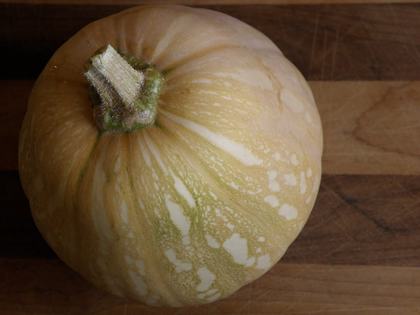
This elective introduces an elementary student to gardening the old-fashioned way, with heirloom seeds and no chemicals. It begins with the seed itself -- what is packed inside one, what it needs to wake up, and why a bean seed always grows beans -- and then tells the stories behind real heirloom varieties like the Seminole Pumpkin, the Cherokee Purple tomato, and the Kentucky Wonder bean. From there your student learns that dirt is alive: earthworms, beetles, and the tiny creatures that turn dead leaves into food for plants. Later units cover mulch and wood chips as a blanket for the soil, building a compost pile with the right mix of browns and greens, growing zones and frost dates, planting and tending tomatoes, beans, and squash, the bees and butterflies and ladybugs that do so much of the work, how a flower turns into food, when and how to pick each kind of vegetable, and finally saving seed for next year and sharing the extra with neighbors and the church table. Each lesson opens with a verse from the King James Bible, and the ideas that come back again and again are God's design in a seed, patient work, thankfulness, and generosity.
This course adapts to where you live. The first time your student opens it, the course asks for your USDA plant hardiness zone, listed with familiar cities beside each one so it is easy to choose, and you can change it later. Six of the lessons -- the ones about zones, frost dates, choosing varieties, and planting from heirloom seed -- then show an "In Your Zone" section under the reading that gives the frost dates and planting months for your own region and names the heirloom varieties that have done well there for generations. A student in Minnesota and a student in Florida read the same lesson and get planting advice that actually fits their yard.
The course is 10 units of 10 lessons each, 100 lessons in all, self-paced rather than part of the daily schedule. A lesson is a short reading, usually 150 to 350 words in a few clearly headed sections, followed by a ten-question multiple-choice quiz that grades itself. The writing is aimed at a confident reader in grades 3 through 5, with plain sentences and terms explained the first time they appear, though a beginning reader may still appreciate having the lesson read aloud. No garden is required to finish the course and pass the quizzes. That said, this is a hands-on subject at heart, and much of it can be done small: seeds started in a cup on a sunny windowsill, a bucket of compost, saved pumpkin and bean seeds drying on a paper towel, worms watched in a corner of the yard. A few square feet of bed or a couple of large pots will turn most of these lessons into something your student can go outside and see. Frost dates, zones, and variety advice assume North America.
What the course covers
What a seed is and what it needs to sprout
Heirloom varieties and the families who saved them
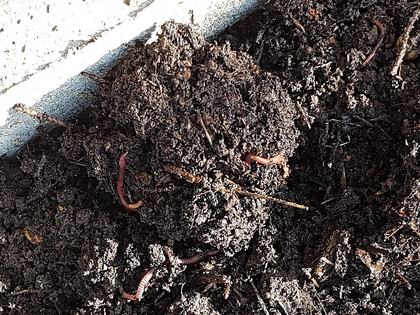
Soil life: earthworms, beneficial bugs, and worm castings
Mulch, wood chips, and simple no-till layering
Composting with browns and greens
Growing zones, frost dates, and what grows where you live
Planting and caring for tomatoes, beans, and squash
Pollinators, ladybugs, and other garden helpers
From flower to fruit, and knowing when to harvest
Saving seed and sharing the harvest with neighbors and church
What your student will be able to do
Plant a seed at the right depth and spacing and keep it watered
Save and dry pumpkin, bean, and tomato seed for next spring
Build and feed a simple compost pile with the right brown-to-green mix
Recognize helpful garden insects and protect them without sprays
Tell when a vegetable is ready to pick and harvest it properly
Use frost dates to decide when it is safe to plant
Scope and sequence
All 10 units of Heirloom & Organic Gardening for Grade 4, in the order they are taught.
These photographs appear in the lessons themselves, not just on this page. Every one is freely licensed and credited to its photographer at the foot of this page.
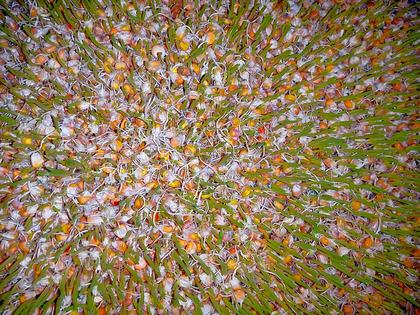
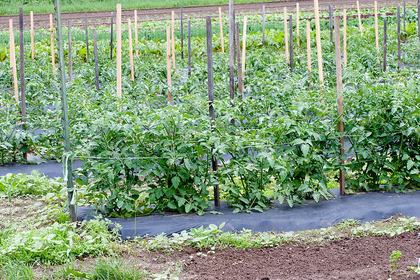
Maize seeds germinationTheMbgold (MBart) / Wikimedia Commons / CC BY-SA 4.0Seminole pumpkin fruitCreative Commons / Wikimedia Commons / CC BY 3.0Worms in soil factoryMalcolm Fowles / Wikimedia Commons / CC BY-SA 4.0Tomato Support (5843173257)Creative Commons / Wikimedia Commons / CC BY 2.0
Every lesson, by title
All 100 lesson titles are listed here — nothing is withheld until you download. Open a unit to read its contents.
7Harvesting Beans, Peas & Cucumbers – Pick Them Young!10 q
8What If It's Not Quite Ripe? — Ripening & Storage Wisdom10 q
9Using Your Harvest – From Garden to Table with Thankfulness10 q
10Planning Next Year's Harvest – Seeds, Timing & Zones10 q
Unit 10: Sharing the Harvest — Seeds, Neighbors & the Church Table 10 lessons
1Saving Seeds — Why & How10 q
2The Seed-to-Seed Story10 q
3Dry Seeds vs. Wet Seeds10 q
4Storing Seeds for Next Year10 q
5When Abundance Overflows10 q
6Sharing with Neighbors10 q
7The Church Table & Community10 q
8Gratitude as a Practice10 q
9Seeds as Gifts10 q
10Your Harvest Story10 q
One whole lesson, exactly as it comes
This is a real lesson taken from the middle of the course — the teaching text, the practice, the homework, and the first three quiz questions with their answers. It is not a marketing excerpt.
Unit 5: Compost — Turning Scraps Into Treasure · Lesson 1
What Is Compost?
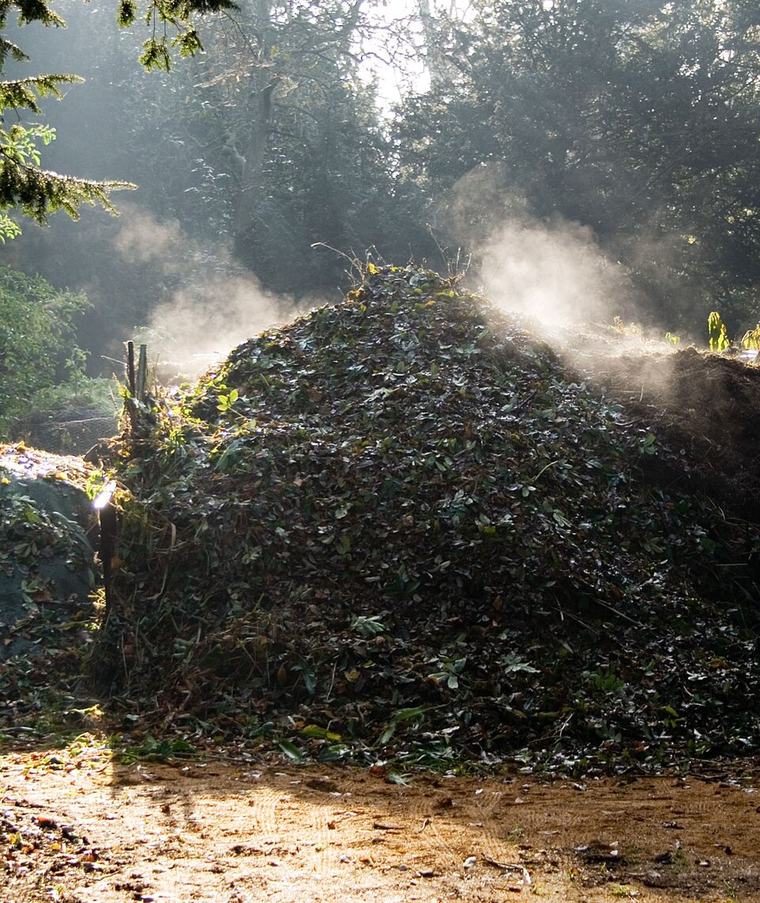
Compost HeapAndrew Dunn / Wikimedia Commons / CC BY-SA 4.0
What Is Compost? The Garden's Best-Kept Secret
Have you ever wondered where the best, richest soil comes from? Not from a store, not from chemicals, but from your own kitchen scraps and yard leaves? That's compost — and it's pure treasure.
Compost is what happens when you pile up things like food scraps, leaves, grass clippings, and plant trimmings, then let nature do the work. Tiny creatures and little helpers you can't see (and some you can, like earthworms) break all that material down into dark, crumbly, beautiful soil. It's not garbage — it's food for the earth, made from things most people throw away.
Why is compost so special? Because it gives your garden soil what it needs to grow strong plants. Good soil holds water like a sponge, feeds plants slowly and naturally, and keeps roots healthy. When you use compost, you don't need chemical fertilizers. You're giving your garden what it wants the way God designed it to work.
The cool part? You create compost yourself, right in your yard. You're not making something new — you're returning what came from the earth back to the earth, enriched and transformed. That's stewardship at its best.
The first three of this lesson's 10 questions
What is compost made from?
Food scraps, leaves, grass, and plant trimmings
Chemical powders and fertilizers
Only grass clippings
Sand and clay
Show the answer
Answer: Food scraps, leaves, grass, and plant trimmings
Who does most of the work turning compost into soil?
Tiny creatures and helpers you can't always see
The sun only
Rain alone
Farmer chemicals
Show the answer
Answer: Tiny creatures and helpers you can't always see
Why don't we need chemical fertilizers when we use compost?
Compost feeds plants slowly and naturally
Chemical fertilizers don't work
Compost is cheaper
Plants don't like any fertilizer
Show the answer
Answer: Compost feeds plants slowly and naturally
Another 7 questions follow in the lesson itself, each one graded the moment it is answered.
What comes with the download
100 full lessons
Across 10 units, each with objectives, a teaching passage written to be read aloud, guided practice, and homework.
1,000 quiz questions
Graded the instant they are answered, each with the explanation of why that answer is right.
A gradebook that works
Every score kept, a running average maintained, and a breakdown unit by unit — all in the file itself, nothing sent anywhere.
Progress and attendance
Tick lessons off as they are finished, watch the completion bar fill, and mark days present, absent, or excused.
Report card and certificate
Both printable, with your student's name, the grades, and the dates already filled in.
Backup you control
Export every record to a file you keep, and read it back later. A lost browser cache cannot take the year with it.
An answer key
Hidden from the student by default, there for the parent marking the work.
Nothing that phones home
No ads, no affiliate links, no analytics, no fonts fetched from elsewhere. Unplug the network cable and every one of these files still works.
What you will need
Drawn from the materials named across all 100 lessons of this course. Most families already own most of it.
No lesson in this course names a material of its own, so there is nothing to buy before you begin. The Grade 4 supply list gathers what the rest of the year needs.
Download Heirloom & Organic Gardening — Grade 4
Free, and free of everything else. 17 files, 15.0 MB in total. No account, no email address, no payment. What you download carries no advertising, no affiliate links and no tracking of any kind.
Use it on a screen
Open any of these straight from a folder or a USB stick. They run in the browser with the network cable unplugged, and nothing is ever sent anywhere.
Every photograph on this page is used under a free licence, and is credited here as that licence requires. Photographs are part of the curriculum itself, so they travel with the download as well.