A self-paced elective on handling money as a steward: budgeting, saving, debt, banking, investing, taxes, insurance, and giving.
Elective Self-paced. It is not part of the daily schedule, so it can be taken over a summer, spread across a year, or left out entirely.
One course, offered four ways. Personal Finance is self-paced, and the same course is listed under Grade 9, Grade 10, Grade 11 and Grade 12 so it can be counted as a credit in whichever year a family takes it. The lessons are identical; take it whenever it suits.
This elective teaches ordinary money skills on a stewardship foundation. It opens with the conviction that everything belongs to God and that we manage rather than own it, then works outward into the practical matters a young adult actually meets: building and keeping a monthly budget, telling needs from wants, starting an emergency fund, understanding compound interest, how credit cards and interest rates work, what student loans really cost, opening and protecting a bank account, spotting fraud and predatory lending, the basics of stocks, bonds, index funds, and retirement accounts, reading a pay stub and filing a simple tax return, choosing health, auto, renters, and life insurance, and planning for a home, a trade or business, and a family. Every lesson opens with a verse from the King James Bible, and the recurring themes are contentment, honesty, diligence, prudence, and cheerful generosity.
The course is 10 units of 10 lessons each, 100 lessons in all, self-paced rather than tied to a daily schedule. A lesson is a short reading, usually 350 to 750 words, followed by a ten-question multiple-choice quiz that grades itself. The writing is plain high school prose that defines each term as it introduces it, so no prior business or math coursework is needed beyond ordinary arithmetic and percentages. Unit 9 handles giving directly: it traces the tithe from the Old Testament through the New Testament teaching on cheerful and sacrificial giving, and it presents tithing as a discipline many believers keep while leaving room for families who give differently. Unit 8 includes an honest look at Anabaptist mutual aid and faith-based health cost sharing as a real alternative to commercial insurance, with both its strengths and its limits.
A few practical notes. This is a reading and study course, and it does not require software, a spreadsheet, or a bank account to complete, though it means far more to a student who has a job, an allowance, or a first checking account to practice on. Several lessons will naturally lead to questions only you can answer, since they touch on how your own household budgets, gives, insures, and borrows, and the course itself repeatedly tells the student to seek counsel from parents and trusted older believers. The material assumes the United States throughout: dollars, W-2 and 1099 forms, an April filing deadline, Social Security and Medicare withholding, 401(k) plans and IRAs. Please also expect the specifics to age. Dollar amounts, average student loan balances, standard deduction figures, contribution limits, and sample interest rates reflect the time of writing and will drift, so treat them as illustrations of how the math works rather than current figures, and look up the present numbers together when a lesson turns practical.
What the course covers
Biblical stewardship, contentment, and the heart behind money
Building, keeping, and adjusting a monthly budget
Emergency funds, savings goals, and compound interest
Credit cards, interest rates, credit scores, and student loans
Checking and savings accounts, bank fees, fraud, and online safety
Stocks, bonds, index funds, diversification, and retirement accounts
Paychecks, withholding, tax documents, and filing a basic return
Health, auto, renters, and life insurance, plus mutual aid traditions
Tithing, cheerful giving, and generosity of time and talent
Career choice, housing, family finances, and legacy planning
What your student will be able to do
Build a working monthly budget and adjust it as circumstances change
Calculate the true cost of a loan and compare borrowing options honestly
Read a pay stub, a bank statement, and basic tax documents
Evaluate an investment or insurance option for risk, cost, and conscience
Plan systematic giving as a normal part of a budget rather than leftovers
Recognize scams, predatory lending, and get-rich-quick schemes
Scope and sequence
All 10 units of Personal Finance for Grade 10, in the order they are taught.
Units in this course, in teaching order
Unit
Covers
Lessons
Questions
Jump to lessons
Unit 1
God's Ownership & Our Stewardship — Biblical Foundations for Money
These photographs appear in the lessons themselves, not just on this page. Every one is freely licensed and credited to its photographer at the foot of this page.
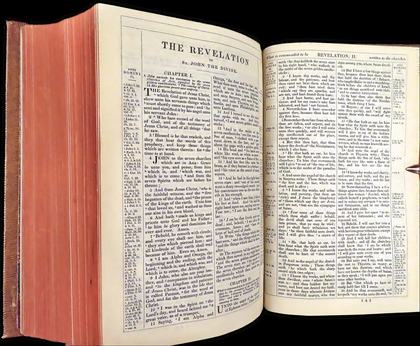
Everything Belongs to God: The Meaning of StewardshipTranslators of the King James Bible. Eyre and Spottiswoode (publisher) / Wikimedia Commons / Public domainSetting Savings Goalsstevepb / Wikimedia Commons / CC0Risk and RewardJeremy Thompson / Wikimedia Commons / CC BY 2.0Homeowners and Renters InsuranceAlbert Henry Barnes / Wikimedia Commons / Public domain
Every lesson, by title
All 100 lesson titles are listed here — nothing is withheld until you download. Open a unit to read its contents.
Unit 1: God's Ownership & Our Stewardship — Biblical Foundations for Money 10 lessons
1Everything Belongs to God: The Meaning of Stewardship10 q
2The Parable of the Talents10 q
3Contentment vs. the Love of Money10 q
4Work as God's Design for Provision10 q
5Debt: Biblical Wisdom and Warnings10 q
6Honesty in Financial Dealings10 q
7Planning Ahead: The Ant and the Sluggard10 q
8Money and the Heart10 q
9Trusting God's Provision10 q
10Building Your Own Stewardship Philosophy10 q
Unit 2: Budgeting Basics — From Income to Spending Wisely 10 lessons
1Why Every Christian Should Budget10 q
2Tracking Income and Expenses10 q
3Needs vs. Wants10 q
4The Envelope System and Simple Budgeting Methods10 q
5Fixed vs. Variable Expenses10 q
6Building Your First Monthly Budget10 q
7Adjusting a Budget When Life Changes10 q
8Budgeting as a Couple or Family10 q
9Common Budgeting Mistakes10 q
10Sticking to a Budget Long-Term10 q
Unit 3: The Power of Saving — From Emergency Fund to Future Dreams 10 lessons
1Why Saving Matters: Wisdom from Proverbs10 q
2Setting Savings Goals10 q
3Building an Emergency Fund10 q
4Where to Keep Your Savings10 q
5The Power of Compound Interest10 q
6Automating Your Savings10 q
7Saving for Short-Term Goals10 q
8Saving for Long-Term Goals10 q
9Balancing Saving with Giving and Spending10 q
10Building a Savings Habit for Life10 q
Unit 4: Understanding & Managing Debt — Credit, Loans & Financial Health 10 lessons
1What the Bible Says About Debt10 q
2How Credit Cards Work10 q
3Interest Rates and the True Cost of Borrowing10 q
4Credit Scores: What They Are and Why They Matter10 q
5Good Debt vs. Bad Debt? A Christian Evaluation10 q
Unit 6: Growing Your Wealth — Investing for Your Future 10 lessons
1What Is Investing? Growing What God Has Given10 q
2Risk and Reward10 q
3Stocks: Owning a Piece of a Business10 q
4Bonds: Lending Your Money10 q
5Mutual Funds and Index Funds10 q
6Retirement Accounts: 401(k)s and IRAs10 q
7The Power of Starting Early10 q
8Diversification: Not Putting All Eggs in One Basket10 q
9Avoiding Get-Rich-Quick Schemes10 q
10Investing with a Clear Conscience10 q
Unit 7: Taxes & Your Paycheck — Understanding Your Obligations 10 lessons
1Render Unto Caesar: Taxes and the Christian10 q
2How Income Tax Works10 q
3Reading a Paycheck and Pay Stub10 q
4Types of Taxes You'll Encounter10 q
5Filing a Basic Tax Return10 q
6W-2s, 1099s, and Tax Documents10 q
7Tax Withholding and Refunds10 q
8Self-Employment and Taxes10 q
9Common Tax Mistakes to Avoid10 q
10Taxes as Part of Community Life10 q
Unit 8: Protection Through Insurance — Covering Life's Risks 10 lessons
1Why Insurance Exists: Sharing Risk10 q
2Health Insurance Basics10 q
3Auto Insurance Basics10 q
4Homeowners and Renters Insurance10 q
5Life Insurance: Protecting Your Family10 q
6Understanding Deductibles and Premiums10 q
7How Much Insurance Do You Really Need?10 q
8Insurance Scams and Fraud to Avoid10 q
9Community and Mutual Aid Traditions10 q
10Balancing Insurance with Trust in God's Provision10 q
Unit 9: Generosity & Giving — The Joy of Cheerful Giving 10 lessons
1The Tithe: Old Testament Roots10 q
2Cheerful Giving in the New Testament10 q
3The Widow's Mite: Giving Sacrificially10 q
4Giving to Your Local Church10 q
5Giving to Missions and the Needy10 q
6Planning Generosity Into Your Budget10 q
7Giving Time and Talent, Not Just Money10 q
8Generosity and Contentment10 q
9Teaching Children to Give10 q
10A Lifestyle of Generosity10 q
Unit 10: Life Planning & Legacy — Building Your Financial Future 10 lessons
1Setting Financial Goals with Purpose10 q
2Choosing a Career with Both Provision and Calling in Mind10 q
3Planning for Major Life Expenses10 q
4Buying vs. Renting a Home10 q
5Preparing for Marriage and Family Finances10 q
6Financial Planning for a Business or Trade10 q
7Legacy and Inheritance: Planning for Your Family10 q
8Avoiding Lifestyle Inflation10 q
9Seeking Wise Financial Counsel10 q
10A Steward's Life: Bringing It All Together10 q
One whole lesson, exactly as it comes
This is a real lesson taken from the middle of the course — the teaching text, the practice, the homework, and the first three quiz questions with their answers. It is not a marketing excerpt.
Unit 6: Growing Your Wealth — Investing for Your Future · Lesson 1
What Is Investing? Growing What God Has Given
What Is Investing? Growing What God Has Givennappa / Wikimedia Commons / CC BY 2.0
Investing is the practice of putting money into assets such as stocks, bonds, or real estate with the expectation that they will generate returns over time. Unlike simply keeping money in a checking account, investing means actively choosing to place your resources where they can grow and work for you. As Christians, we understand this through the biblical lens of stewardship—God has entrusted us with resources, and we are called to manage them wisely and faithfully.
Understanding What Investing Really Is
At its core, investing is about delayed gratification and trust. You give up having money available to spend today in exchange for the possibility of having more money in the future. This requires both patience and faith—patience to let investments grow over time, and faith that your decisions are sound. The Bible's parable of the talents in Matthew 25 directly addresses this principle. The master gave money (talents) to his servants and expected them to invest and grow that wealth. The servants who did so were rewarded; the one who simply buried his talent was condemned.
Why Young People Should Take Investing Seriously
You might think investing is something only adults near retirement need to worry about. This is far from the truth. Young investors possess one invaluable asset that no amount of money can buy: time. The earlier you start investing, even with small amounts, the more opportunity your money has to compound and grow. Consider a simple example: someone who invests one hundred dollars per month starting at age fifteen may accumulate significantly more wealth by age sixty-five than someone who invests five hundred dollars per month but doesn't start until age thirty-five. This dramatic difference is due to compound growth—earnings generate additional earnings, which then generate more earnings, and so on.
The Categories of Investments You'll Learn About
Investments come in several main forms. Stocks represent partial ownership in companies. Bonds are essentially loans you make to corporations or governments, earning interest. Real estate is property ownership. Mutual funds and index funds combine many investments into one package. Retirement accounts like 401(k)s and IRAs offer special tax advantages for long-term saving. We'll explore each of these categories in detail.
Stewardship as Your Spiritual Foundation
Before you invest a single dollar, remember that true stewardship means more than simply accumulating wealth. It means asking questions about values: Where am I putting my money? What does this company do? Does it align with my faith and principles? Is my motive to make a quick fortune, or am I thinking long-term and responsibly? The Bible warns us that the love of money is a root of evil. Investing is not evil, but the attitudes we bring to it matter greatly. As you learn to invest with wisdom and a clear conscience, you're not just building wealth—you're developing godly character.
The first three of this lesson's 10 questions
According to Proverbs 13:11, what happens to wealth that is obtained through vanity?
It stays the same forever
It becomes a blessing
It shall be diminished
It increases significantly over time
Show the answer
Answer: It shall be diminished
What is the primary difference between saving money in a bank account and investing?
Investing places your money into assets seeking growth and returns, while saving just keeps money accessible
Investing is safer
Saving earns more money over time
There is no real difference
Show the answer
Answer: Investing places your money into assets seeking growth and returns, while saving just keeps money accessible
Why do young investors have a significant advantage?
Young people typically have more money available to invest
They naturally understand investments better than adults
Age makes no difference in investing success
They have more time for compound growth before retirement
Show the answer
Answer: They have more time for compound growth before retirement
Another 7 questions follow in the lesson itself, each one graded the moment it is answered.
What comes with the download
100 full lessons
Across 10 units, each with objectives, a teaching passage written to be read aloud, guided practice, and homework.
1,000 quiz questions
Graded the instant they are answered, each with the explanation of why that answer is right.
A gradebook that works
Every score kept, a running average maintained, and a breakdown unit by unit — all in the file itself, nothing sent anywhere.
Progress and attendance
Tick lessons off as they are finished, watch the completion bar fill, and mark days present, absent, or excused.
Report card and certificate
Both printable, with your student's name, the grades, and the dates already filled in.
Backup you control
Export every record to a file you keep, and read it back later. A lost browser cache cannot take the year with it.
An answer key
Hidden from the student by default, there for the parent marking the work.
Nothing that phones home
No ads, no affiliate links, no analytics, no fonts fetched from elsewhere. Unplug the network cable and every one of these files still works.
What you will need
Drawn from the materials named across all 100 lessons of this course. Most families already own most of it.
No lesson in this course names a material of its own, so there is nothing to buy before you begin. The Grade 10 supply list gathers what the rest of the year needs.
Download Personal Finance — Grade 10
Free, and free of everything else. 17 files, 39.7 MB in total. No account, no email address, no payment. What you download carries no advertising, no affiliate links and no tracking of any kind.
Use it on a screen
Open any of these straight from a folder or a USB stick. They run in the browser with the network cable unplugged, and nothing is ever sent anywhere.
Every photograph on this page is used under a free licence, and is credited here as that licence requires. Photographs are part of the curriculum itself, so they travel with the download as well.
Everything Belongs to God: The Meaning of Stewardship — Translators of the King James Bible. Eyre and Spottiswoode (publisher) / Wikimedia Commons / Public domain