

Unit 6: Worldviews in Conflict — Secularism, Eastern Religion & Truth · Lesson 1
What Every Worldview Must Answer

Understanding Worldviews
Everyone has a worldview—a fundamental way of understanding reality, truth, meaning, and how we should live. Your worldview shapes your choices, your values, and how you respond to life's biggest questions. As Christians, understanding different worldviews helps us live faithfully and communicate effectively with people who see the world differently.
A worldview is not simply a political opinion or a preference. It is a comprehensive framework through which we interpret everything: our purpose, morality, truth, and eternity. Whether someone recognizes it or not, they are answering certain fundamental questions every day.
The Six Universal Questions
Every worldview, whether explicitly or implicitly, must answer these basic questions:
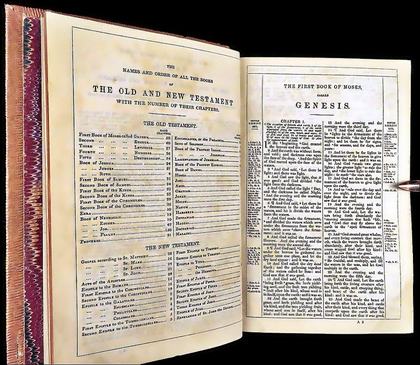
First, the question of origin. Where did we come from? Why does the universe exist? For Christians, the answer begins with God. Genesis 1:1 tells us, "In the beginning God created the heavens and the earth." Other worldviews offer different explanations—some deny a creator altogether.
Second, the question of identity and nature. What are we? Are humans special or simply products of material processes? The Christian understanding is that we are made in the image of God (Genesis 1:27), giving us distinctive dignity, responsibility, and purpose that no other created thing possesses.
Third, the question of meaning and purpose. Why do we exist? What gives life significance? Some worldviews say we create our own meaning; Christianity teaches that our ultimate purpose is to know God, worship Him, and extend His kingdom.
Fourth, the question of morality. What is right and wrong? Where do moral standards come from? Are they absolute or merely personal preferences? Christians believe that God's character is the foundation of all morality, revealed through Scripture and conscience.
Fifth, the question of the problem we face. What is wrong with the world? What is wrong with us? Christianity identifies sin as the root problem—our separation from God through disobedience.
Sixth, the question of redemption and destiny. How can we be restored? What happens after we die? Christianity proclaims that Christ's death and resurrection provide the way back to God, and that believers will spend eternity with Him.
Why This Matters
Understanding these foundational questions helps us recognize how different worldviews diverge at crucial points. Two people might seem to agree on surface-level issues, but if their worldviews differ on these fundamental questions, their deeper values and ultimate directions will be completely different.
As a Christian, you already have answers to these questions rooted in Scripture. Learning about other worldviews is not about becoming uncertain of your own faith. Rather, it equips you to understand why others believe what they do, to recognize areas where Christianity genuinely offers something better, and to communicate your faith with compassion and clarity.
The apostle Paul reminds us in Romans 12:2 to not be conformed to the world, but to be transformed by renewing our minds. This renewing process includes understanding the worldviews around us and how they compare to the truth of God's Word.
The first three of this lesson's 10 questions
According to the lesson, what is one of the six universal questions that every worldview must answer?
Show the answer
Answer: Where did we come from and why does the universe exist?
According to Genesis 1:27, how are humans uniquely distinguished in creation?
Show the answer
Answer: They are made in the image of God.
What does Romans 12:2 say we should not do?
Show the answer
Answer: Be conformed to this world
Another 7 questions follow in the lesson itself, each one graded the moment it is answered.