A self-paced survey of the church from Pentecost to today, with a full unit on the Anabaptists.
Elective Self-paced. It is not part of the daily schedule, so it can be taken over a summer, spread across a year, or left out entirely.
One course, offered four ways. Church History is self-paced, and the same course is listed under Grade 9, Grade 10, Grade 11 and Grade 12 so it can be counted as a credit in whichever year a family takes it. The lessons are identical; take it whenever it suits.
This elective follows the church's story from the upper room to the present. It begins with Pentecost, Paul's journeys, and daily life in the first congregations, then moves through Roman persecution and the early martyrs, the councils that produced the Nicene and Apostles' Creeds, the medieval papacy and the Great Schism, the monasteries that copied Scripture and fed the poor, and the missionaries who carried the gospel to Ireland, Germany, and the Slavic lands. The second half covers Wycliffe, Hus, and the printing press; Luther, Zwingli, Calvin, and the five solas; a full unit on the Anabaptists, including believer's baptism, the Schleitheim Confession, Menno Simons, the Hutterites, and the peace position; then the awakenings, Wesley, William Carey and modern missions, persecution under communism, and the church as it stands today in Africa, Asia, and Latin America. Each lesson opens with a verse from the King James Bible.
The course is 10 units of 10 lessons each, 100 lessons in all, self-paced rather than tied to a daily schedule. A lesson is a short reading, usually 350 to 550 words, followed by a ten-question multiple-choice quiz that grades itself. The writing is plain high school prose that names dates, places, and people without assuming prior background, so a student who has never studied history formally can follow it. There is no equipment, no project requirement, and no prerequisite beyond steady reading. The final unit turns the story toward the student, arguing that most of church history was carried by ordinary believers whose names were never written down.
A few notes for you and your family. This is a reading course, and it tells the church's story honestly, including the parts that do not flatter it: the corruption and sale of indulgences that provoked the Reformation, and a lesson on the Crusades that states plainly that Crusaders committed terrible violence against Muslim and Jewish people and that this contradicted the teaching of Christ. Martyrdom and persecution come up throughout, from Polycarp and Perpetua to the drowning of Anabaptists to believers under communist regimes and in closed countries today. Those lessons carry a short printed note at the top saying the lesson discusses persecution and martyrdom, and they were written to convey the courage without dwelling on the cruelty. Where Christians have long and sincerely disagreed, the course presents both sides from Scripture and then stops: the lessons on justification by faith alone and on nonresistance versus just war each set out the competing positions fairly and then tell your student in plain words to ask you what your family believes and why. The Anabaptist unit is the longest treatment of any single movement, and the later units describe the Pentecostal and charismatic movements descriptively rather than taking a position on them.
What the course covers
Pentecost, the book of Acts, and Paul's missionary journeys
Roman persecution, the catacombs, and the early martyrs
Nicaea, Chalcedon, the creeds, and the divinity of Christ
The medieval papacy, the Great Schism, and the Crusades
Monasteries, manuscript copying, and medieval missions
Wycliffe, Hus, indulgences, and the printing press
Luther, Zwingli, Calvin, and the five solas
The Anabaptists: believer's baptism, Schleitheim, and nonresistance
The Great Awakenings, Wesley, and the modern missionary movement
The global and persecuted church today
What your student will be able to do
Trace the church's story from Pentecost to the present in order
Explain what the Nicene and Apostles' Creeds affirm and why they were written
Describe what the Reformers and the Anabaptists each recovered, and where they parted
Weigh the church's real failures honestly alongside its faithfulness
Recognize a question faithful Christians answer differently and take it home to your family
Connect an ordinary believer's daily service to the larger story God is telling
Scope and sequence
All 10 units of Church History for Grade 11, in the order they are taught.
Units in this course, in teaching order
Unit
Covers
Lessons
Questions
Jump to lessons
Unit 1
Pentecost to the Empire — Birth & Spread of the Apostolic Church
These photographs appear in the lessons themselves, not just on this page. Every one is freely licensed and credited to its photographer at the foot of this page.
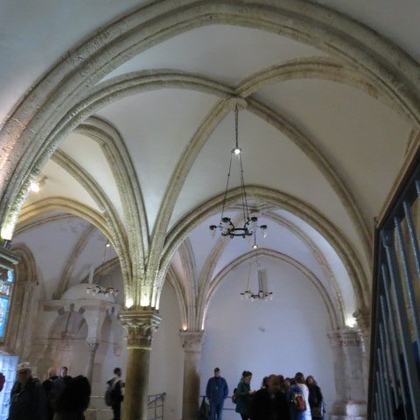
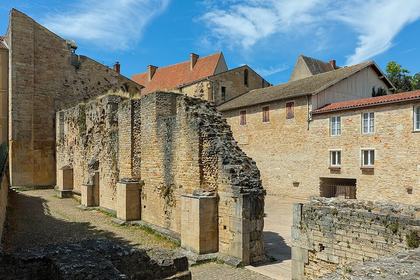
The Church Begins: Pentecost and the Book of ActsHoshvilim / Wikimedia Commons / CC BY-SA 4.0Athanasius: Defender of the FaithInstitute for the Study of the Ancient World / Wikimedia Commons / CC BY 2.0Hospitality, Copying Scripture, and Serving the PoorBenjamin Smith / Wikimedia Commons / CC BY-SA 4.0The Schleitheim ConfessionWandervogel / Wikimedia Commons / CC BY-SA 4.0
Every lesson, by title
All 100 lesson titles are listed here — nothing is withheld until you download. Open a unit to read its contents.
Unit 1: Pentecost to the Empire — Birth & Spread of the Apostolic Church 10 lessons
1The Church Begins: Pentecost and the Book of Acts10 q
2The Apostles' Ministry and Martyrdom10 q
3Paul's Missionary Journeys10 q
4The Church Spreads Across the Roman Empire10 q
5Life in the Early Christian Communities10 q
6Worship in the Early Church10 q
7The Jerusalem Council and Unity Questions10 q
8Early Christian Writings Beyond the New Testament10 q
9Why Rome Saw Christians as a Threat10 q
10Lessons from the First-Century Church10 q
Unit 2: Persecution & Courage — The Church Under Fire (100-312 AD) 10 lessons
1The Apostolic Fathers: Who They Were10 q
2Ignatius of Antioch and Early Church Leadership10 q
3Polycarp and Faithfulness Unto Death10 q
4Roman Persecution: Why and How It Happened10 q
5The Catacombs and Hidden Worship10 q
6Justin Martyr and Early Christian Apologetics10 q
7Perpetua and Felicity: Courageous Witnesses10 q
8The Edict of Milan and the End of Persecution10 q
9What the Persecuted Church Teaches Us10 q
10Faith That Costs Something10 q
Unit 3: Defining Orthodoxy — Councils, Creeds & the Defense of Christ's Divinity 10 lessons
1Why the Early Church Needed Councils10 q
2The Council of Nicaea (325 AD)10 q
3The Nicene Creed10 q
4Arianism and the Battle for Christ's Divinity10 q
5Athanasius: Defender of the Faith10 q
6The Council of Constantinople (381 AD)10 q
7The Council of Chalcedon and the Nature of Christ10 q
8The Apostles' Creed10 q
9Why Creeds Matter for Christians Today10 q
10Guarding Sound Doctrine10 q
Unit 4: Medieval Christianity — Papacy, Power & Division (Fall of Rome to Reformation) 10 lessons
1The Fall of Rome and the Church's New Role10 q
2The Rise of the Papacy10 q
3The Church and Medieval Society10 q
4The Great Schism: East and West Divide10 q
5The Crusades: Causes and Consequences10 q
6Scholasticism and Medieval Christian Thought10 q
7Cathedrals and Christian Art10 q
8Corruption and Calls for Reform10 q
9Preservers of Learning: Monasteries and Manuscripts10 q
10Setting the Stage for Reformation10 q
Unit 5: Monasteries & Missions — Evangelization & Learning in Medieval Times 10 lessons
1The Desert Fathers and the Beginning of Monasticism10 q
2Benedict of Nursia and the Benedictine Rule10 q
3Monasteries as Centers of Learning and Charity10 q
4Patrick and the Evangelization of Ireland10 q
5Boniface and the Mission to Germany10 q
6Cyril and Methodius: Missionaries to the Slavs10 q
7Missionary Journeys to Asia10 q
8Women in Medieval Missionary and Monastic Life10 q
9Hospitality, Copying Scripture, and Serving the Poor10 q
10Lessons from the Missionary Movement10 q
Unit 6: Seeds of Reformation — Wycliffe, Hus & the Printing Press 10 lessons
1Why Reform Was Needed10 q
2John Wycliffe: Translating Scripture into English10 q
3The Lollards and Early Bible Distribution10 q
4Jan Hus: Preaching Reform in Bohemia10 q
5The Council of Constance and Hus's Martyrdom10 q
6The Printing Press: A World-Changing Invention10 q
7Christian Humanism and Erasmus10 q
8Corruption in the Late Medieval Church10 q
9Indulgences and the Sale of Forgiveness10 q
10The Stage Is Set for Luther10 q
Unit 7: The Reformation — Luther, Calvin & Biblical Truth Recovered 10 lessons
1Martin Luther and the Ninety-Five Theses10 q
2Justification by Faith Alone10 q
3The Diet of Worms: Here I Stand10 q
4Luther's German Bible Translation10 q
5Ulrich Zwingli and the Swiss Reformation10 q
6John Calvin and Geneva10 q
7The Five Solas of the Reformation10 q
8The Reformation in England10 q
9The Counter-Reformation and Catholic Response10 q
10The Lasting Impact of the Reformation10 q
Unit 8: The Radical Reformation — Anabaptists, Discipleship & Nonresistance 10 lessons
1Radical Reformers: Why "Anabaptist" Means "Re-baptizer"10 q
2Conrad Grebel and the Swiss Brethren10 q
3Believer's Baptism: A Return to New Testament Practice10 q
4The Schleitheim Confession10 q
5Persecution of the Anabaptists10 q
6Menno Simons and the Mennonites10 q
7Jacob Hutter and the Hutterites10 q
8Nonresistance and the Peace Position10 q
9The Anabaptist Vision: Discipleship, Community, and Separation10 q
10The Anabaptist Legacy Today10 q
Unit 9: Revival & Expansion — Awakenings, Missions & Modern Christianity 10 lessons
1The Great Awakenings in America10 q
2John Wesley and the Methodist Movement10 q
3The Rise of Modern Missions10 q
4William Carey: Father of Modern Missions10 q
5The Church and the Industrial Age10 q
6American Denominations Take Shape10 q
7The Church Responds to War and Suffering10 q
8Persecution Under Communism and Totalitarian Regimes10 q
9The Charismatic and Pentecostal Movements10 q
10Faithfulness in a Changing World10 q
Unit 10: The Global Church Today — Growth, Diversity & Worldwide Faithfulness 10 lessons
1Christianity's Center of Gravity Shifts South and East10 q
This is a real lesson taken from the middle of the course — the teaching text, the practice, the homework, and the first three quiz questions with their answers. It is not a marketing excerpt.
Unit 6: Seeds of Reformation — Wycliffe, Hus & the Printing Press · Lesson 1
Why Reform Was Needed
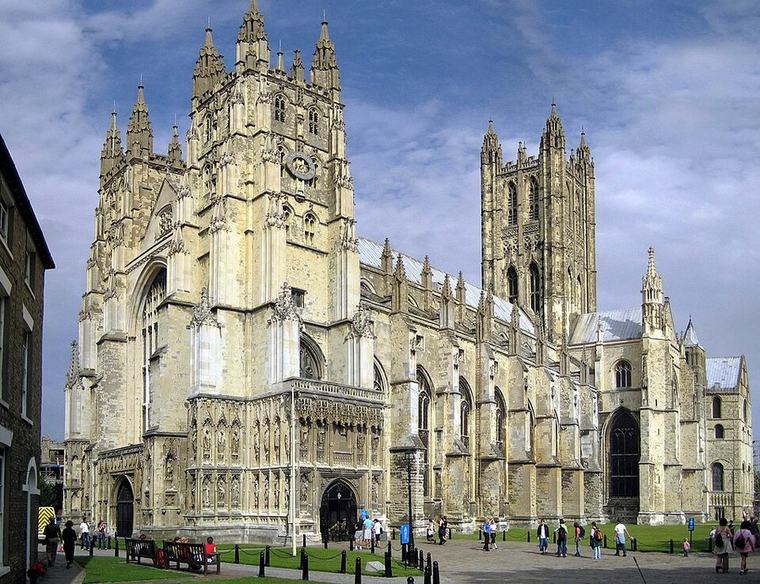
Why Reform Was NeededHans Musil / Wikimedia Commons / CC BY-SA 4.0
The State of the Medieval Church
By the 1300s and 1400s, the Christian church had drifted far from its biblical moorings. What had begun as a pure faith centered on Christ and His Word had become entangled with politics, wealth, and human traditions. The church controlled vast territories, commanded armies, and accumulated treasures that would astound us today. Yet for all its earthly power, the church had lost something essential: the simple gospel of salvation through faith in Jesus Christ.
Spiritual Lethargy and False Teaching
Ordinary believers were kept at arm's length from Scripture. The Bible was written in Latin, a language most common people could not read. The Mass was conducted in Latin. Theology became the domain of scholars and priests, while laypeople were expected simply to obey and believe what the church told them. This created a system where false teachings could flourish unchecked. Priests claimed the power to forgive sins, to guarantee salvation, to control access to heaven itself. The Bible promised that Christ alone is our mediator (1 Timothy 2:5), yet the church had placed itself between God and man.
Corruption and Worldliness
Many church leaders were more interested in power and money than in spiritual truth. Bishops and popes lived in luxury, waged wars over territory, and fathered children they passed church positions to. Clergy broke their vows of celibacy, yet there was no accountability. Simony—the buying and selling of church offices—was rampant. A rich man could purchase forgiveness for his sins; a poor man had no hope. This was not Christianity; it was a perversion of it.
The Hunger for Scripture
Yet God's Spirit was stirring hearts. Faithful believers longed to read Scripture themselves, to know God's Word directly rather than through ecclesiastical intermediaries. They recognized the gap between what Jesus taught and what the church practiced. When Jesus said, "It is written," He was calling people back to Scripture. When the apostles opened the Word in synagogues, they empowered ordinary people to test all things by God's truth (Acts 17:11).
Why Reform Became Necessary
The church had become an obstacle to faith rather than a channel for it. Believers saw that the system was broken—that spiritual truth cannot be monopolized or commercialized. Reform was not rebellion against the church; it was a call to return the church to its foundations: Christ as Savior, Scripture as authority, and grace as the only means of salvation. What began as a whisper of correction would soon become a roar that shook all of Christendom.
The first three of this lesson's 10 questions
What language was the Bible primarily written in during the medieval church?
English
German
Greek
Latin
Show the answer
Answer: Latin
According to 2 Peter 2:1, what do false teachers bring among believers?
Damnable heresies
Scientific knowledge
Poverty and hardship
Political reform
Show the answer
Answer: Damnable heresies
What practice involved the buying and selling of church offices?
Monasticism
Simony
Tithing
Pilgrimage
Show the answer
Answer: Simony
Another 7 questions follow in the lesson itself, each one graded the moment it is answered.
What comes with the download
100 full lessons
Across 10 units, each with objectives, a teaching passage written to be read aloud, guided practice, and homework.
1,000 quiz questions
Graded the instant they are answered, each with the explanation of why that answer is right.
A gradebook that works
Every score kept, a running average maintained, and a breakdown unit by unit — all in the file itself, nothing sent anywhere.
Progress and attendance
Tick lessons off as they are finished, watch the completion bar fill, and mark days present, absent, or excused.
Report card and certificate
Both printable, with your student's name, the grades, and the dates already filled in.
Backup you control
Export every record to a file you keep, and read it back later. A lost browser cache cannot take the year with it.
An answer key
Hidden from the student by default, there for the parent marking the work.
Nothing that phones home
No ads, no affiliate links, no analytics, no fonts fetched from elsewhere. Unplug the network cable and every one of these files still works.
What you will need
Drawn from the materials named across all 100 lessons of this course. Most families already own most of it.
No lesson in this course names a material of its own, so there is nothing to buy before you begin. The Grade 11 supply list gathers what the rest of the year needs.
Download Church History — Grade 11
Free, and free of everything else. 17 files, 59.6 MB in total. No account, no email address, no payment. What you download carries no advertising, no affiliate links and no tracking of any kind.
Use it on a screen
Open any of these straight from a folder or a USB stick. They run in the browser with the network cable unplugged, and nothing is ever sent anywhere.
Every photograph on this page is used under a free licence, and is credited here as that licence requires. Photographs are part of the curriculum itself, so they travel with the download as well.
The Church Begins: Pentecost and the Book of Acts — Hoshvilim / Wikimedia Commons / CC BY-SA 4.0
Athanasius: Defender of the Faith — Institute for the Study of the Ancient World / Wikimedia Commons / CC BY 2.0
Hospitality, Copying Scripture, and Serving the Poor — Benjamin Smith / Wikimedia Commons / CC BY-SA 4.0
The Schleitheim Confession — Wandervogel / Wikimedia Commons / CC BY-SA 4.0
Why Reform Was Needed — Hans Musil / Wikimedia Commons / CC BY-SA 4.0